Chinook Salmon
The king. Stocked into the lakes in the 1960s to eat alewives and now the single biggest driver of Great Lakes charter money. Fights deeper and harder than anything else out there.
America's Only Great Lake
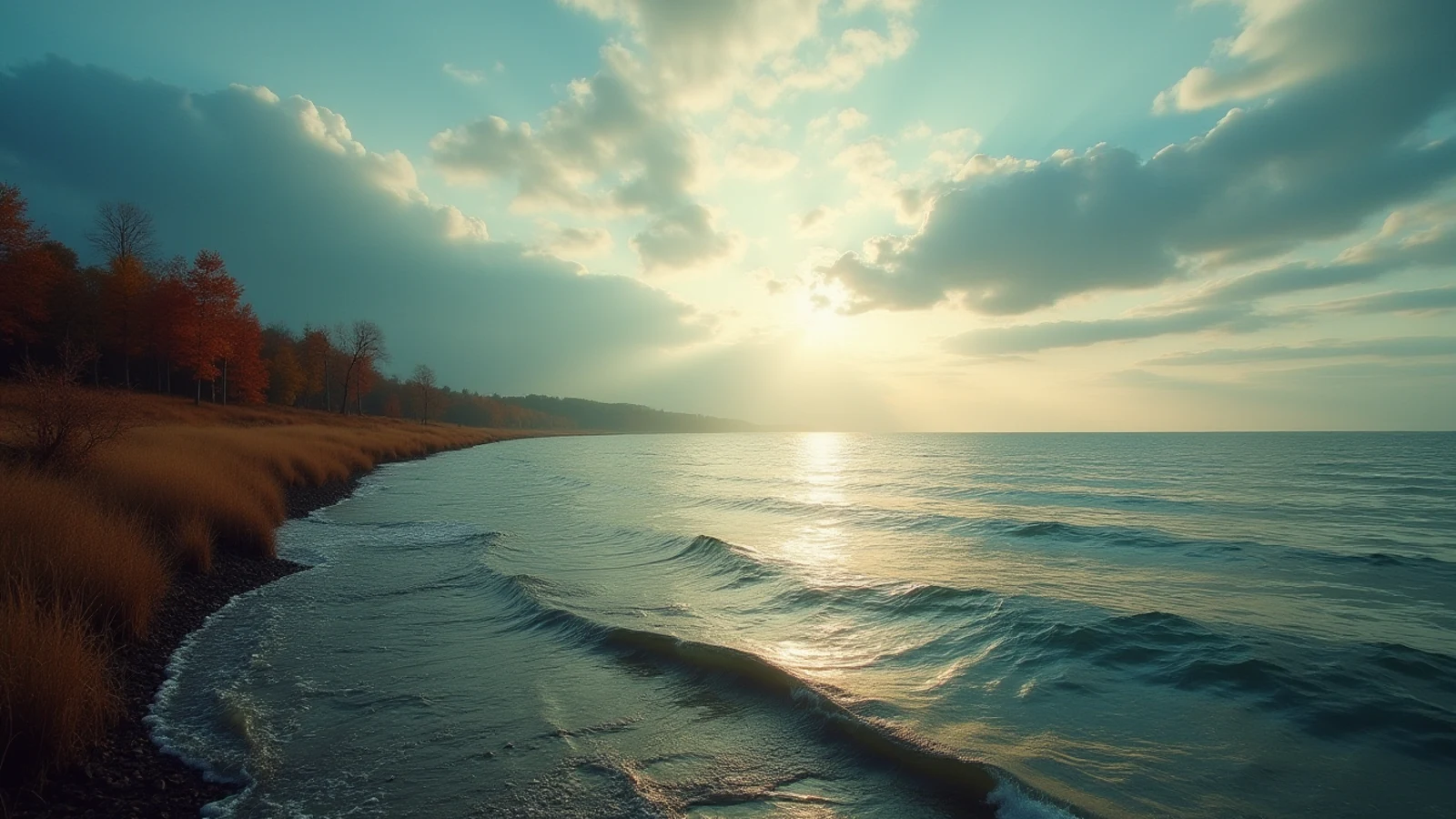
The only Great Lake entirely inside the United States, and the engine of the salmon fishery. Dune coast on the east, big-city harbors on the west, and a summer king salmon program that draws boats from every state on the chain.
Surface area
22,404sq mi
Max depth
925ft
Average depth
279 ft
Shoreline
1,640mi
Volume
1,180cu mi
Elevation
577 ft asl
What swims here
The king. Stocked into the lakes in the 1960s to eat alewives and now the single biggest driver of Great Lakes charter money. Fights deeper and harder than anything else out there.
The spring opener. Cohos school tight near the surface in April and May off the southern Lake Michigan ports, which makes them the most beginner-accessible salmon on the chain.
The people’s fish. Schooling, cooperative, catchable from a pier or a shanty, and the backbone of a Friday fish fry from Sandusky to Sheboygan.
The shallow-water prize. Browns hold tight to the beach in cold water, which puts genuine 15-pound fish inside 20 feet of water within sight of shore in early spring.
Ambush predator of every weed edge and back bay on the chain. Available to shore anglers, kayakers, and ice fishermen, which makes it the most democratic big fish in the system.
The native. Lakers were here before the stocking programs and survived the sea lamprey collapse in Superior when they vanished everywhere else. Deep, cold, slow-growing, long-lived.
The fish of ten thousand casts, except on Lake St. Clair, where the population density is high enough that the number is a lot closer to a few hundred. The best muskie water on the continent.
The commercial fish that became a sport fish. Whitefish took over the ice-fishing calendar in northern Michigan and Wisconsin once anglers worked out they will chase a jigging spoon in 60 feet of water.
A living fossil, protected nearly everywhere on the chain, and a genuine conservation success story in the St. Clair system. Catch-and-release only in most waters — check the state rulebook before you even rig a rod.
Great Lakes smallmouth are a different animal from the river fish most anglers know: bigger, meaner, and living on open rock and grass where four pounds is an ordinary afternoon.
The year on Michigan
April and May are the most beginner-friendly weeks of the year on this lake. Warm discharge and shallow south-end water pulls coho into tight surface schools off Chicago, Waukegan, Michigan City and St. Joseph, and you catch them in 15 to 40 feet on small spoons and dodger-fly rigs behind planer boards. Brown trout hold inside 20 feet along dark sand and rock. Boards, not riggers, are the tool — the fish are above the boat, not below it.
By late June the thermocline is set and chinook are living on the 45-to-55-degree band, often 60 to 120 feet down over 150 to 400 feet of water. This is downrigger, dipsy and copper fishing: green and blue spoons early, flasher-fly combinations mid-morning, meat rigs when the fish get picky. Run 2.2 to 2.6 mph over ground and watch the surface temperature break. Perch fishing turns on in the harbors and along the Illinois and Wisconsin shore at the same time.
From mid-August into October mature chinook stack off the river mouths — Ludington, Manistee, the Grand, the St. Joseph, the Kewaunee — before they run. Fish get shallow, aggressive and unpredictable, and pier casters get real shots at them at first light. Once the fish are in the rivers, steelhead follow them upstream to eat eggs and stay all winter.
The open lake does not freeze in any usable way. What you get instead is perch and pike through the ice in protected harbors, bays and drowned river mouths — Green Bay is the serious hardwater destination in this basin, and the Bay de Noc system holds walleye. Tributary steelhead fishing runs all winter on the Michigan side whenever the rivers are not locked up. Big Green Bay ice conditions vary hugely year to year.
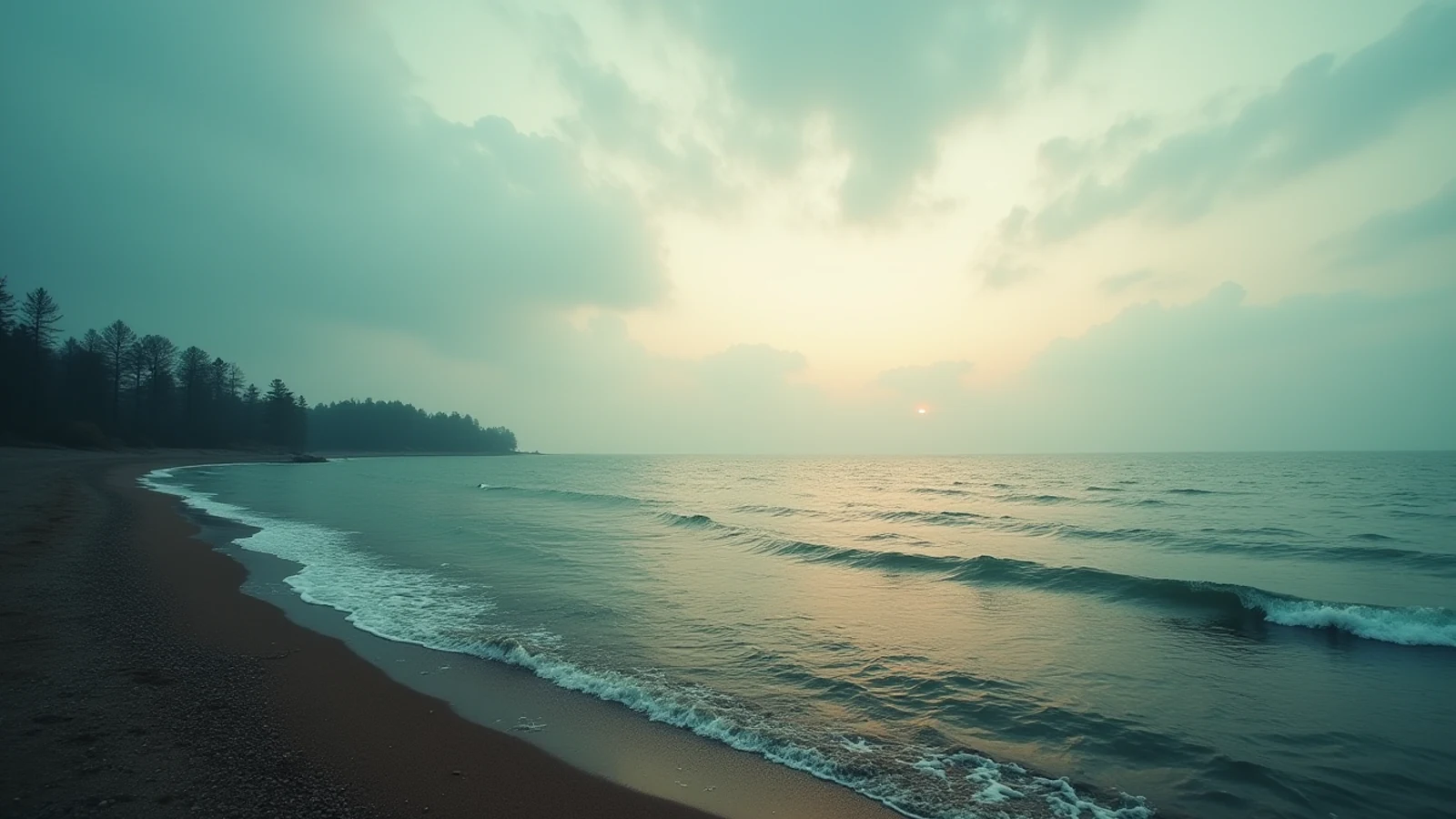
Lake Michigan is a long north-south trough with a dune coast on the east and a hard, harbor-lined city coast on the west. That shape controls the fishing. A lake this long gathers enormous fetch for a north or south wind, and it also means the north end and the south end are on different calendars by weeks. Cohos are being caught in 45-degree water off Chicago while the water off Frankfort is still turning over.
The east shore is sand and shifting bottom; the west shore has more rock and more structure close to town. Neither matters as much as temperature. This is a water-column fishery. The single most useful thing on a Lake Michigan boat is a surface temperature readout plus a probe on the downrigger ball telling you where the 48-degree water actually sits, because that is where the kings are and it moves fifty feet vertically over a couple of days.
The other thing that defines the lake is water clarity. Quagga mussels have made the offshore water dramatically clearer than it was in the 1980s. Clear water pushes fish deeper in daylight and makes early morning and low light worth getting up for.
Alewife are a small Atlantic herring that got into the upper lakes through the same canal system the lamprey used. With the native lake trout knocked out by lamprey, nothing was left to eat them. By the mid-1960s alewife made up an estimated majority of the fish biomass in Lake Michigan, and every spring they died off in enormous numbers and washed up on the beaches. Chicago and Milwaukee ran bulldozers on the sand. It was a public health nuisance and an ecological mess.
Howard Tanner took over Michigan’s fisheries division in 1964 and made a decision that reshaped the entire region: rather than try to poison the alewife, put a Pacific predator on top of them. Coho salmon eggs from Oregon went into Michigan tributaries and the first fish were planted in 1966. Chinook followed in 1967.
Nobody involved expected what happened next. The salmon grew at extraordinary rates on an unlimited forage base, and by 1967 the fall coho run at Platte Bay produced a traffic jam and a fishing frenzy that made national news. Within a decade a charter industry existed on a coast that had not had one. Wisconsin, Indiana and Illinois followed Michigan into stocking. The Great Lakes sport fishery as it exists today is a direct descendant of that one management gamble.
The permanent lesson is that the whole thing is a balance. Kings eat alewife; alewife eat plankton; quagga mussels filter plankton out of the water. When any of those legs moves, biologists adjust stocking numbers, and they have adjusted downward more than once. The fishery is real and it is excellent. It is also managed, deliberately, every single year.
Ludington and Manistee are the summer kings capital of the east shore. Deep water close to the harbor, a large charter fleet, and reliable staging fish in August.
Frankfort and Arcadia put you on the north-end structure with shorter runs to deep water than almost anywhere on the lake.
Traverse City on Grand Traverse Bay is a different fishery inside the same lake — smallmouth, lake trout, and protected water when the big lake is unfishable.
Milwaukee, Racine and Kenosha anchor the Wisconsin side with harbor structure, spring browns, and a straight shot to mid-lake summer kings.
Chicago and Waukegan deliver the most urban-accessible salmon fishing in the country: coho in the harbors in April, perch off the walls in summer.
Door County and Green Bay are their own world — smallmouth on the rock, walleye in the bay, and the best ice fishing in the basin.
Pick your port by month, not by proximity. Driving three extra hours to be on the right end of the lake in the right week is the highest-return decision you will make.
If you have never trolled big water, take a charter first. A half day out of Ludington or Milwaukee teaches you spread geometry, speed, and how to read a temperature break faster than a season of reading forums.
Watch the wind direction as much as the wave height. An offshore wind gives you flat water going out and a hard slog coming home, and it can upwell cold water that shuts the bite off entirely.
Fish first light. On clear post-mussel water, the difference between 5:30 a.m. and 9:00 a.m. is often the whole day.
Ports & launch towns
Largest ramps with published lane counts (MI)
All 143 public Lake Michigan launches →
All 97 Lake Michigan lighthouses →
All 459 Lake Michigan beaches, with water testing →
Shoreline states
Know before you go
Off the water
A dolomite headland on the Lake Michigan side of Door County, Wisconsin, where waves have undercut the limestone cliff into caves and arches.
An 18.5-mile paved path along Lake Michigan through Chicago, from Ardmore Avenue on the north side to 71st Street on the south.
A 48-acre sand beach on Lake Michigan at the mouth of the Grand River, with the Grand Haven pier and its red catwalk running out to the light.
Six and a half miles of Lake Michigan shoreline at Zion, Illinois — the only remaining natural beach ridge and dune community in the state.
Fifteen miles of Lake Michigan shoreline and dune country at the south end of the lake, between the Gary steel mills and Michigan City, Indiana.
Two miles of Lake Michigan dune and beach south of Sheboygan, Wisconsin, with a cordwalk through one of the state's last intact dune systems.
Read next
Two invasive species wrecked the Great Lakes food web, and a Michigan biologist answered with Pacific salmon. The history behind every charter boat here.
A layering system for Great Lakes spring and fall fishing: what each layer does, what cotton costs you, and why the outer shell is a safety decision.
Three ways to get a bait deep on the Great Lakes, what each costs in money and deck space, and an honest order to buy them in.
How Great Lakes steelhead and salmon runs work, what water conditions turn them on, and the river etiquette that keeps a crowded hole fishable.
The best swimming beaches on the Great Lakes, and how rip, structural, and channel currents form, how to spot them, and how to get out.
The Great Lakes hold more lighthouses than any coastline in America. These are the ones worth building a trip around, and what makes each one different.
Kit
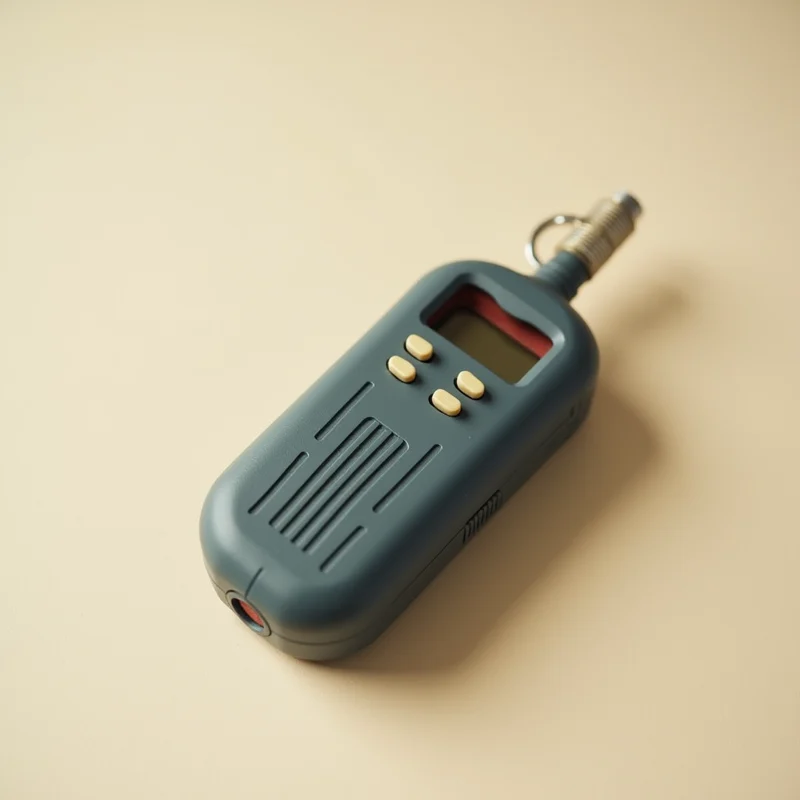
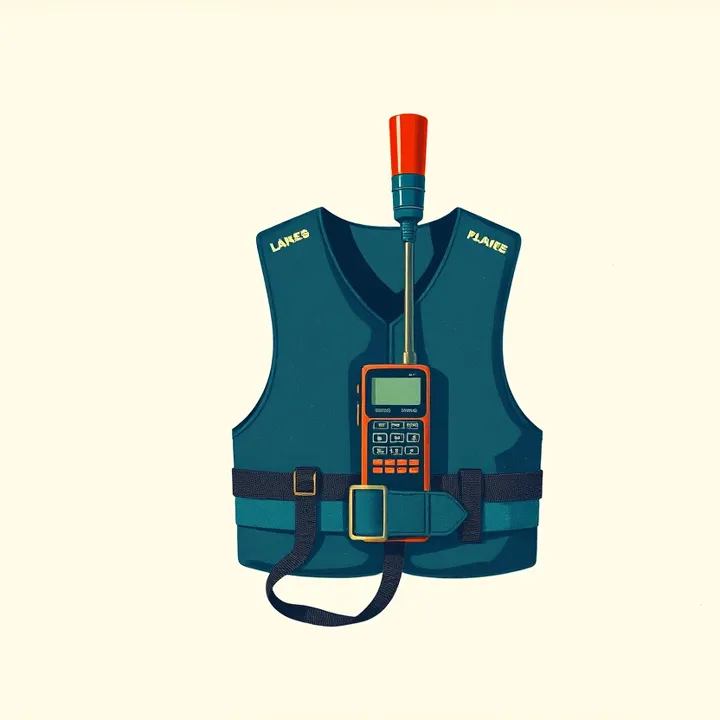
A floating, submersible six-watt handheld that reaches the Coast Guard when a cell phone has no bars, which offshore on Superior and Huron is most of the time.
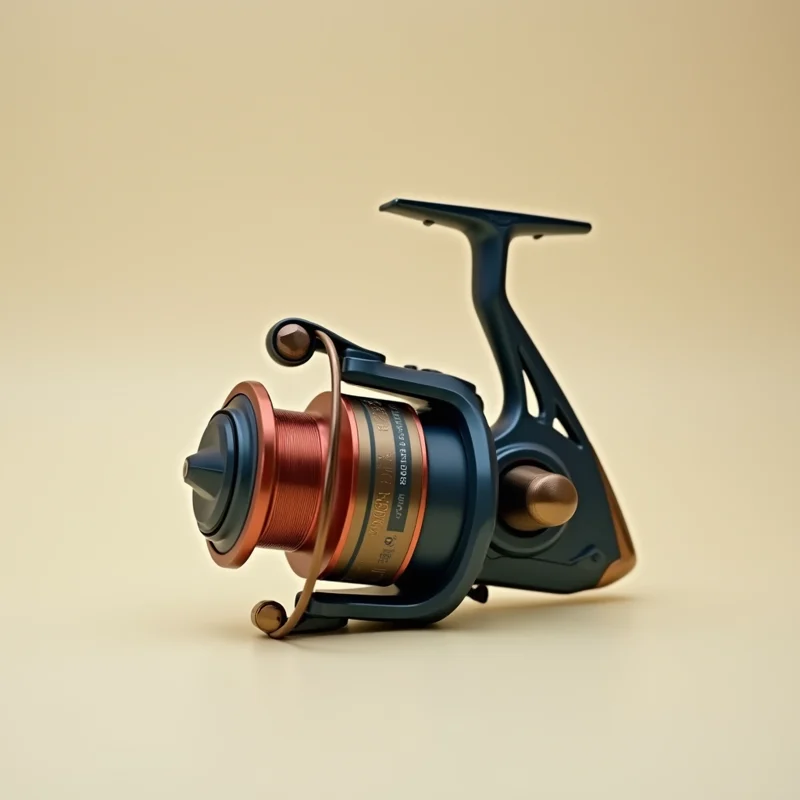
The reel the charter fleet actually runs, with a drag that stays smooth through a 20-pound king's third run.
A satellite personal locator beacon that puts your GPS position in front of search and rescue from anywhere on the lakes, with no subscription and no cell signal.
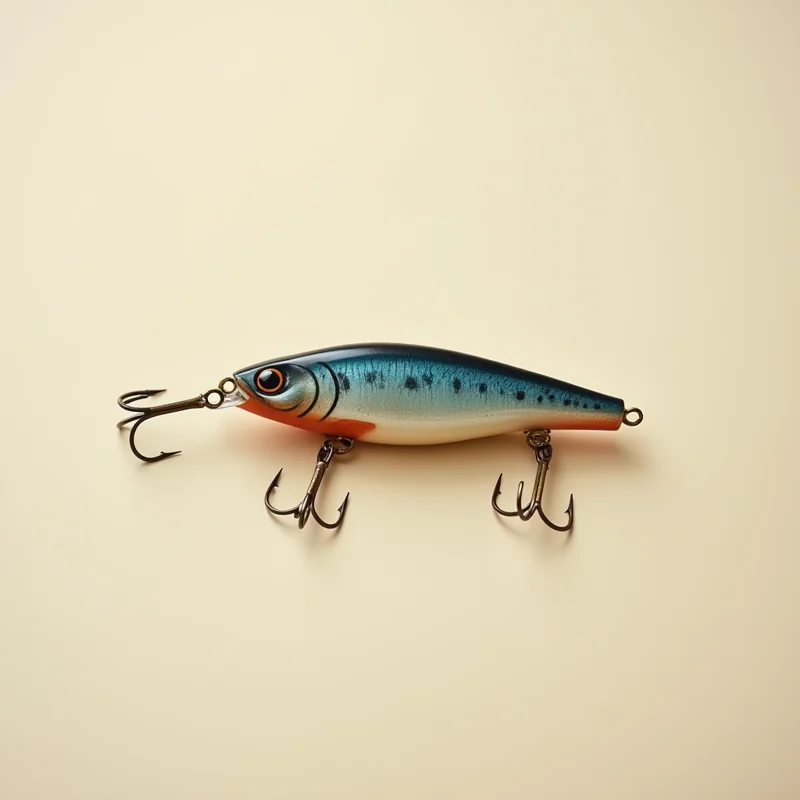
A short buoyant stick bait that stands up off bottom on a light jighead — the highest-percentage smallmouth bait on the lakes.
Common questions
Sources
Last updated 2026-09-01