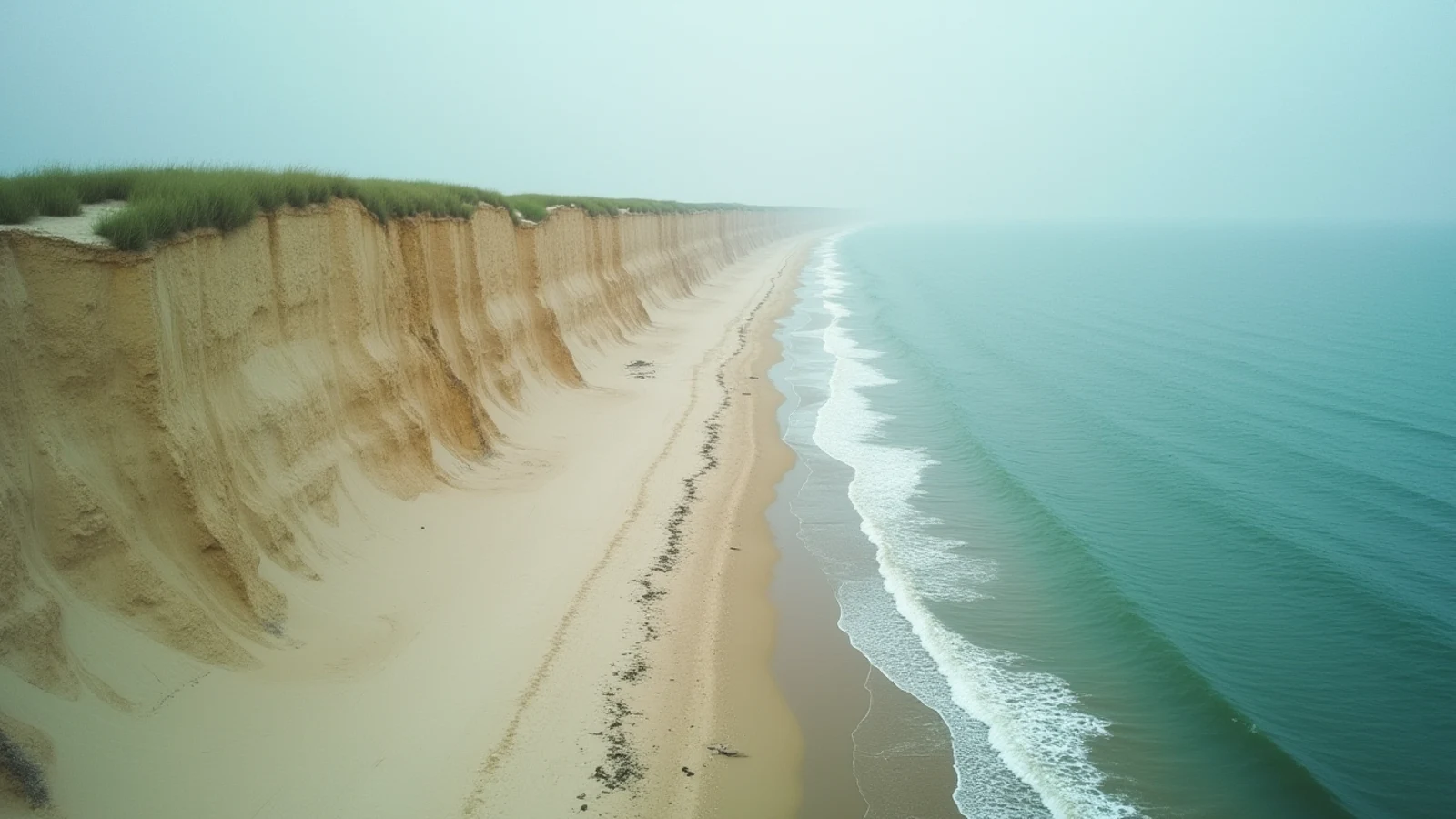
dunes · Lake Michigan · est. 1966
Indiana Dunes National Park
Fifteen miles of Lake Michigan shoreline and dune country at the south end of the lake, between the Gary steel mills and Michigan City, Indiana.
Indiana has 45 miles of Great Lakes shoreline, the shortest of the eight states, and it holds one of the most consequential pieces of ground in American ecology.
The dunes at the south end of Lake Michigan are where Henry Chandler Cowles did the fieldwork in the 1890s that established ecological succession as a concept — the observation that plant communities change in a predictable sequence over time, readable here as a walk inland from the open beach through marram grass, cottonwood, pine, oak savanna and finally mature hardwood forest. Walking from the water to the back dunes takes you through thousands of years of that sequence in twenty minutes.
The park was a national lakeshore from 1966 and became a national park in 2019. It is about 15,000 acres in fragments, wrapped around the towns of Ogden Dunes, Dune Acres and Beverly Shores, with Indiana Dunes State Park — a separate state unit with its own fee — sitting in the middle of it.
Beaches
Several, and they are different.
West Beach in the national park has a bathhouse, a guarded swimming season, a large lot, and the Dune Succession Trail, which climbs a dune on 270-odd steps and lays out the whole succession story with signage. It is the best introduction.
Porter Beach, Kemil, Dunbar, Lake View and Central Avenue are smaller access points, mostly unguarded.
Indiana Dunes State Park beach is wide, has a pavilion, and is the trailhead for the 3 Dune Challenge.
Mount Baldy is a live dune — bare sand, migrating inland several feet a year as wind pushes it over the forest behind. Because it is moving and because of a 2013 incident in which a child fell into a void in the sand, access to the dune itself is restricted to ranger-guided programs. The beach below is open by trail.
The water — take it seriously
The south end of Lake Michigan is the most dangerous stretch of Great Lakes beach in the country for swimmers, and it is not close. The reason is geometry: this shore faces north up the full 300-mile length of the lake, so a north wind arrives with maximum fetch behind it and stacks water against the Indiana shore with nowhere to go but back out.
The return flow becomes a rip current. Where there is a pier, groin or breakwall — Michigan City’s, the harbor structures, the mill outfalls — it becomes a structural rip running fast and straight offshore alongside the concrete.
What to do about it:
- Swim at a guarded beach, during guarded hours, in front of the tower.
- Stay well away from piers and breakwalls. Do not swim beside them and do not jump off them.
- If a current pulls you out, swim parallel to shore until it releases you, then come in at an angle. Do not try to out-swim it straight back to the beach.
- If you cannot swim out of it, float on your back and signal. Drowning here is usually exhaustion, not distance.
- Watch the flag. Red means the lake is doing this today, and it is the days that look pleasant from the parking lot that catch people.
The NWS Chicago office issues a daily beach hazards forecast for this shore in summer. Read it before you drive out.
When to go and what to know
June through September for the water; the guarded season runs roughly Memorial Day to Labor Day with posted hours. May and September for migration — the dunes are a major flyway stop and over 350 bird species have been recorded.
An entrance fee applies to the national park; Indiana Dunes State Park charges separately at its own gate, and the two passes are not interchangeable. Lots at West Beach and the state park fill by late morning on hot weekends.
The South Shore Line runs from Chicago to South Bend with stops at Dune Park and Beverly Shores, putting the beach within walking distance of a train. It is the best car-free lake access in the region.
Perch and salmon fishing runs out of Michigan City and Portage. Indiana DNR sets Lake Michigan seasons and limits; they change annually.
What you came for
- About 15 miles of Lake Michigan shoreline across 15,000-plus acres, in fragments between industry and towns.
- Mount Baldy is a live migrating dune moving inland several feet a year; access is guided and restricted.
- The 3 Dune Challenge in adjacent Indiana Dunes State Park climbs Mount Tom, Mount Holden and Mount Jackson — 1.5 miles and about 552 vertical feet of sand.
- More than 1,100 native plant species recorded, the botanical diversity that made this ground famous in ecology.
- The South Shore Line commuter train stops at Dune Park and Beverly Shores — you can reach the beach from Chicago without a car.
Lights on this shore
- Michigan City Breakwater Light8.9 mi · est. 1911
- Michigan City East Light8.9 mi · est. 1904
- Old Michigan City Light9.0 mi
Swimming here
These beaches are on the state’s federal beach list, with the water-testing record and a link to today’s advisories:
- Indiana Dunes State Park East Beach0.9 mi · water sampled
- Indiana Dunes State Park West Beach1.0 mi · water sampled