The Mid-Lake Reef Complex
A chain of offshore shoals between Milwaukee and the Michigan shore that rise well out of the deep basin. The single most important lake trout structure in the lake and the focus of restoration work.
Lake Trout · Lake Michigan
Lake Michigan lake trout are the most dependable fish in the lake — they are there in numbers when the kings are not, and they will bite in flat, hot, bright conditions that shut a salmon program down. Fish the reefs and the deep basin edges, and expect to work 100 to 180 feet down from July on.
Prime time
May and June on shallow rock, July through September deep, plus a fall reef concentration
Depths
25–60 ft in spring, 100–180 ft in midsummer
Typical size
5–12 lb
Lake max depth
925 ft
Where
A chain of offshore shoals between Milwaukee and the Michigan shore that rise well out of the deep basin. The single most important lake trout structure in the lake and the focus of restoration work.
Deep, protected and holding lake trout year-round. The East and West arms give up fish from 60 to 200 feet, and a small boat can fish it safely on days the open lake is unusable.
Current through the Straits keeps water cold and moving, and lake trout stack on the rock at either end. Fish the shoals west of the bridge.
Wisconsin's Door County ports put you over hard bottom in a hurry. Fish the reefs off the peninsula's Lake Michigan side and the deep water outside Sturgeon Bay.
Northern Michigan rock and steep drops close to shore. Good spring shallow fishing and a reliable summer deep-water program.
The same deep water that holds kings holds lakers underneath them. Put one rigger on bottom in 120 to 170 feet while the rest of the spread fishes salmon.
How
The workhorse. Ball within five feet of bottom in 100 to 180 feet, an 8-inch dodger, a 20-inch leader to a spin-glo or peeled minnow, 1.7 to 2.1 mph. Follow the contour with the sonar and let the ball tick bottom occasionally — that is the depth adjustment that turns a slow day around.
Over the mid-lake reefs or Grand Traverse Bay in 80 to 150 feet, a 1 to 2 oz jigging spoon or jigging minnow bait fished on braid takes fish fast. Hit bottom, snap it 18 inches, let it fall on slack line. Most strikes register as sudden weight.
For fish holding 15 to 40 feet off bottom, run a magnum Dipsy on a 3 setting with 250 to 300 feet of wire and a 10-inch flasher at 2.2 mph. This also catches kings, which is exactly the point in a mixed spread.
In late April and May, with the surface at 40 to 48 degrees, lake trout are on rock in 25 to 60 feet. Pull spoons and stickbaits behind planer boards at 2.2 mph in Grand Traverse Bay, Little Traverse Bay and off Charlevoix.
Lake Michigan’s reputation rests on chinook salmon, and chinook are moody. They follow a thermocline that moves miles in a day, they shut off in flat bright conditions, and they have gotten less numerous as the alewife base thinned. Lake trout do none of that. They live on the bottom in 42 to 48 degree water that barely changes, they feed on goby and sculpin that are not going anywhere, and they will bite at noon in August under a blue sky.
That makes lakers the insurance policy on every Lake Michigan trip and the main event on plenty of them. Six to twelve pounds is ordinary. Twenty-pound fish come off the mid-lake reefs and Grand Traverse Bay most seasons.
Lake Michigan is 925 feet at its deepest with a lot of featureless basin. The lake trout are not spread evenly through it. They are on the mid-lake reef complex, on the rock at the Straits, on the hard bottom off the Door Peninsula, and along the sharp contour breaks off the Michigan ports. Find rock and the depth takes care of itself.
Grand Traverse Bay deserves particular attention. It is deep — over 600 feet in the West Arm — protected from the open lake, and full of lake trout at every season. On a day when the open water is 5 feet and building, the bay is fishable. That reliability is worth planning around.
Almost everything about summer lake trout fishing comes down to how close your bait runs to the bottom. In 140 feet of water, a rigger ball at 130 catches fish and a rigger ball at 120 does not. Set the ball, watch the sonar, and adjust constantly as the contour rolls. If you are not occasionally ticking bottom you are probably too high.
Slow down, too. Salmon speeds of 2.4 mph are wrong for a fish that hunts sculpin on rock. One point seven to 2.1 mph, with a dodger giving the bait its action, is the range.
Round goby arrived in the 1990s and became a primary lake trout food. That pushed the fish even more firmly onto bottom structure and made bottom-contact presentations more effective than they were in the alewife era. It also means a brown or olive spin-glo — not a color anyone would have run in 1990 — is worth having in the box.
Late April and May, the whole water column is cold and lake trout are in 25 to 60 feet on rock. Grand Traverse Bay, Little Traverse Bay and the water off Charlevoix all produce, and you can catch them on the same planer-board-and-spoon setup you would use for brown trout. Light tackle, shallow water, no riggers. Almost nobody fishes it.
Superior’s lake trout are entirely wild, larger on average, and living on structure that requires a long open-water commitment. Huron’s are a rapidly expanding wild population in shallower water. Lake Michigan’s are more heavily supported by stocking, but the lake has more ports, more infrastructure, and more protected alternatives on a windy day than either. It is the easiest of the three to fish well without a big boat, provided you use the bays.
Lake Michigan builds a short steep chop fast in a northwest blow, and the deep water lake trout live in is a long way from anywhere on a bad afternoon. Water 120 feet down is in the 40s year-round and the surface can drop 20 degrees overnight on an upwelling. Wear a PFD, carry a VHF, and use the bays when the big water says no.
Where to put in
Dark marks are launches named in this guide. Generalized shoreline, not for navigation.
Kit
A programmable electric downrigger that cycles baits, tracks bottom, and takes the guesswork out of fishing 100 feet down.
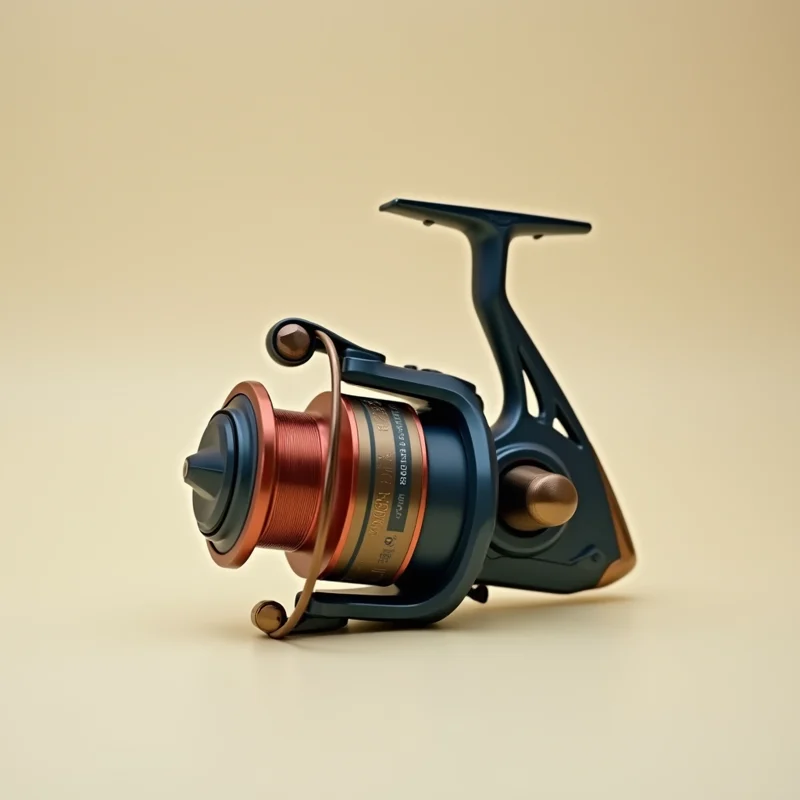
The reel the charter fleet actually runs, with a drag that stays smooth through a 20-pound king's third run.
The value flasher — a smaller, lighter rotator that pulls less than an 11-inch chip and still drives a fly hard.
A balanced swimming jig that darts in a circle on the lift and glides back — the most productive ice lure ever made.
MEGA side imaging that shows individual rocks and fish out to 125 feet either side — the shallow-water structure tool.
Questions
Same fish, other water
Size limits, bag limits, and open seasons for lake trout on Lake Michigan are set by Michigan DNR, Wisconsin DNR, Illinois DNR and Indiana DNR and change from year to year. Check the current rulebook before you keep a fish.
Sources
Last updated 2026-09-01