Ludington and Big Sable Point
The deep water comes close to shore north of the Ludington pumped-storage plant, so you can be in 300 feet inside a six-mile run. Big Sable Point holds a temperature break that stacks bait all summer.
Chinook Salmon · Lake Michigan
Lake Michigan is still the most reliable king salmon water in the United States, and the stretch from St. Joseph to Frankfort will put a 15-pound fish in the box on an ordinary July morning. You will work deeper and farther offshore than your father did, but the fish are there.
Prime time
Late June through Labor Day, with the staging run building through the last two weeks of August
Depths
50–120 ft down over 150–400 ft of water
Typical size
10–18 lb
Lake max depth
925 ft
Where
The deep water comes close to shore north of the Ludington pumped-storage plant, so you can be in 300 feet inside a six-mile run. Big Sable Point holds a temperature break that stacks bait all summer.
Point Betsie funnels the north-flowing current against a fast-dropping shelf. Boats fish the 180 to 320 line here in July and slide into Platte Bay when the fish stage in late August.
Straight west of the Manistee pierheads the bottom rolls out to 400 feet quickly. Early-season fish set up over 120 to 180 and slide deeper as the thermocline sinks.
The Wisconsin side runs colder and shallower on the same calendar. Kings hold tighter to the 100 to 200 contour and the reef complex south of Sheboygan concentrates alewives into July.
The southern basin warms first and fishes best in June, then again when fish stage off the St. Joseph River in late summer. Long runs west to find 55-degree water are normal by mid-July.
How
Set balls at 55 to 100 feet down and run flasher-fly rigs 20 to 25 inches behind an 8- or 10-inch flasher. Hold 2.2 to 2.6 mph on the surface GPS and let the boat swing — the inside rod on a turn gets bit. Green, white and mixed-veggie flashers dominate from first light to about 9 a.m., then switch to white and glow when the sun climbs.
Run a No. 1 Dipsy on a 3 setting off the corner, 200 to 260 feet of wire back, and a 0 setting inside it. The wire drops roughly 5 feet for every 10 feet of line at 2.4 mph. Dipsies get your spread outside the boat wash and pull the aggressive fish that will not come to a rigger.
Copper is how you cover the top 40 to 60 feet without spooking fish. Three hundred feet of 45-pound copper runs about 60 feet down at 2.3 mph; 400 feet runs about 80. Fish it off a planer board 60 to 100 feet outside the wake with a magnum spoon.
Once you find the 52 to 55 degree band on a probe, put two spoons in it and leave them. Blue-silver and green-glow patterns in the morning, orange and copper in the last hour of light. Bump speed to 2.6 mph — kings will chase a spoon faster than they will chase meat.
Chinook were dropped into Lake Michigan in 1966 to eat an alewife population that had gotten so far out of hand that dead bait was windrowed on Chicago beaches. It worked, and it built a charter economy from Waukegan to Charlevoix. Sixty years later the alewife base is a fraction of what it was, the stocking numbers have been cut repeatedly, and the fishery still produces more king salmon than any other water in the country.
What changed is where the fish live. When alewives were thick, kings fed at 40 feet in July. Now they follow a thinner, deeper, more scattered bait supply, and you should plan on fishing 70 to 110 feet down through the middle of summer over water that is 250 feet or better. That is the single biggest adjustment for anyone coming back to this lake after a decade away.
Kings want 50 to 55 degrees and they will not stay long in anything warmer than 58. In June the whole water column is cold enough and the fish spread out from 30 to 80 feet. Through July the surface climbs into the high 60s and the thermocline sets up between 50 and 80 feet. A hard east wind will blow that warm layer offshore and pull 48-degree water right up against the beach — an upwelling — and for one or two days the kings will be in 60 feet of water four hundred yards off the pierheads. Watch surface temperature maps every morning in July; the fish move faster than the reports do.
A downrigger-mounted temperature probe pays for itself the first week. Surface temperature tells you nothing about where the bait is. What you want is the depth where the water goes from 58 to 52 in about ten feet — that band is where you put half your spread.
From roughly the third week of August, mature kings begin gathering off the river mouths they were planted in or ran up as smolts: the Pere Marquette at Ludington, the Big Manistee, the Betsie at Frankfort, the Muskegon, the St. Joseph, and the Wisconsin harbors from Kewaunee south. They stop feeding hard and start behaving territorially, which changes the program. Slow to 1.9 to 2.2 mph, put more meat in the water — flashers and flies rather than spoons — and fish the first two hours of daylight in 60 to 120 feet of water within a mile of the pierheads.
This is the window that makes pier and shore anglers relevant on the big lake. Once the fish push into the harbors in early September, a heavy spoon or a glow-body cast off the north pier at first light is a real shot at a twenty-pounder.
Lake Huron’s chinook fishery collapsed with its alewives in 2003 and never came back at scale; Huron kings today are mostly wild-spawned fish, fewer and thinner. Lake Ontario grows heavier average fish on a healthier alewife base but has far fewer ports and a shorter offshore run. Lake Michigan sits in between: a big, deep, west-coast-of-Michigan trolling grid with enough water to spread out on and enough fish to stay honest. It is also the lake where you are most likely to end a July day with a mixed box — a king, two steelhead and a laker — because all four cold-water species share the same temperature band out there.
An eight-mile offshore run in a 17-foot aluminum boat is a different activity than trolling a harbor. Lake Michigan builds a steep, short chop in a northwest blow and it does it fast. Carry a handheld VHF, wear an inflatable when you are alone in the cockpit, and file a float plan with someone on shore. Surface water that reads 68 degrees in August is 47 degrees at 70 feet, and an upwelling can drop the surface twenty degrees overnight.
Where to put in
Dark marks are launches named in this guide. Generalized shoreline, not for navigation.
Kit
A programmable electric downrigger that cycles baits, tracks bottom, and takes the guesswork out of fishing 100 feet down.
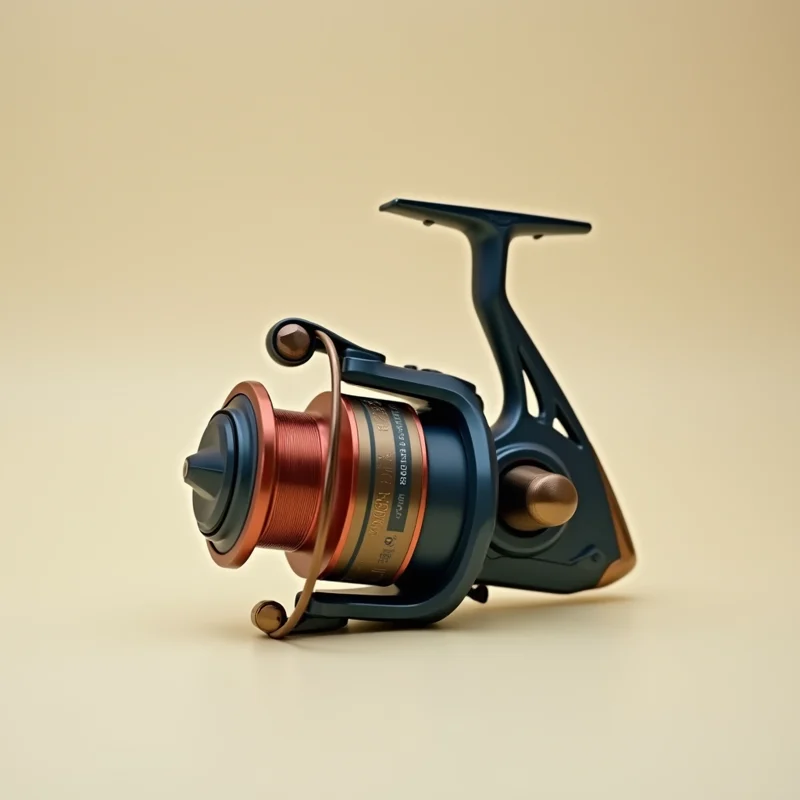
The reel the charter fleet actually runs, with a drag that stays smooth through a 20-pound king's third run.
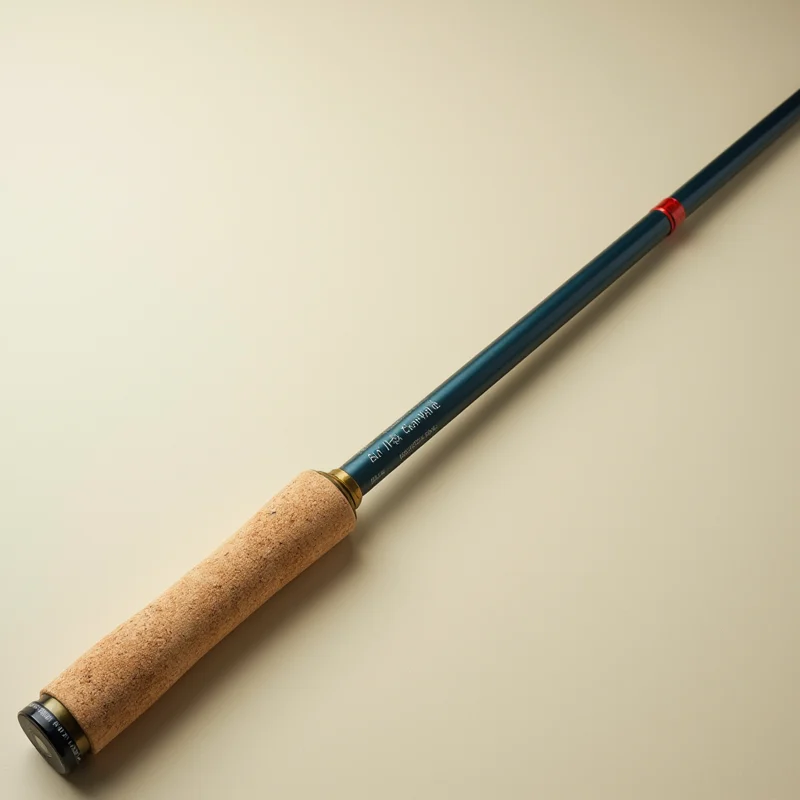
The rod most Great Lakes charter boats actually have in the holders, at a price that lets you buy six of them.
A rotating flasher that emits a small electrical signal along with the flash — run ahead of a fly or a meat rig for kings.
Solid copper trolling line that puts a spoon 60 to 100 feet down with no diver, no rigger, and a much better fight.
Questions
Same fish, other water
Size limits, bag limits, and open seasons for chinook salmon on Lake Michigan are set by Michigan DNR, Wisconsin DNR, Illinois DNR and Indiana DNR and change from year to year. Check the current rulebook before you keep a fish.
Sources
Last updated 2026-09-01