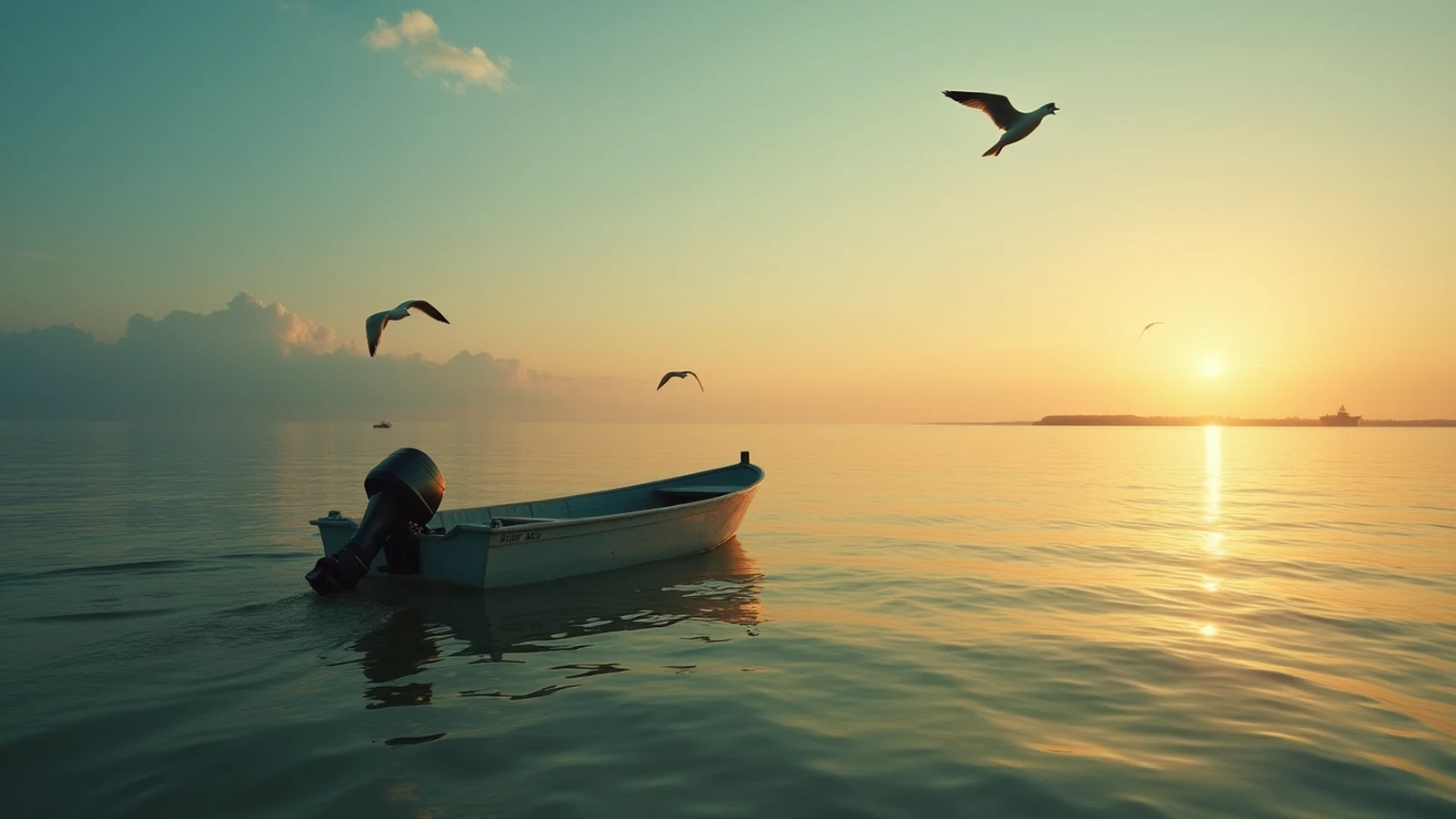
fishing · Lake Erie
Lake Erie yellow perch: spreader rigs and finding schools in open water
How to find a perch school on open Lake Erie, rig a two-hook spreader, pick minnows or shiners, and choose a sinker that holds bottom in wind.
Trip gear · Amazon affiliate picks
Gear mentioned in this guide
Compare the exact model and fit before adding anything to your setup.
Lake Erie perch can school over open bottom, but they also use shoals and firmer patches you can mark on a chart. Search for fish first, then choose a drift or hold over the marks. A two-hook spreader keeps the baits apart while you fish near bottom.
This guide is for a first trip in a small boat. If you have not run Erie before, read Your First Day on Lake Erie and Trailering and Launching on Big Water first. The wind decides whether you fish at all, and the Lake Erie page covers why the lake gets nasty so quickly.
Where the schools are
The Lake Erie page describes a July-to-September window in roughly 25 to 45 feet. Treat that as one starting point, not a lakewide depth rule. The Erie perch page describes shallower western-basin shoals and deeper central-basin water later in the season. Ohio DNR’s fishing reports give a more current place to begin the search.
In the western basin, start with Sandusky Bay, nearby open water and the shoals around the islands. In the central basin, the water off Lorain and Cleveland is deeper; a useful school may be on a flat or along a change in bottom. Near Erie, Pennsylvania, use local reports and a chart rather than carrying an Ohio depth over to a different basin.
Into fall, schools can shift toward bait and harbor approaches. No date or depth holds every year. Start with a recent local report, then search across nearby depths until sonar marks or bites tell you where fish are. Ohio DNR’s reports cover Ohio water; ask a local bait shop or consult the relevant state agency when launching elsewhere.
Pick a launch that fits the day’s wind. A short run in a small boat beats a better spot you cannot safely reach.
Reading sonar for perch
Use sonar to follow depth and look for marks near bottom. A brighter bottom return can indicate harder bottom, but display settings and the transducer affect its appearance. Confirm an apparent change with a chart and a few passes; perch also use shoals and mixed bottom.
Fish may appear as a band near bottom, separate marks, or a suspended group. Bait and clutter can look similar on a small display. Mark a promising return, make a controlled pass, and use bites or caught fish to confirm what you are seeing. If the marks sit off bottom, bring the hooks up to their depth instead of dragging the sinker through mud.
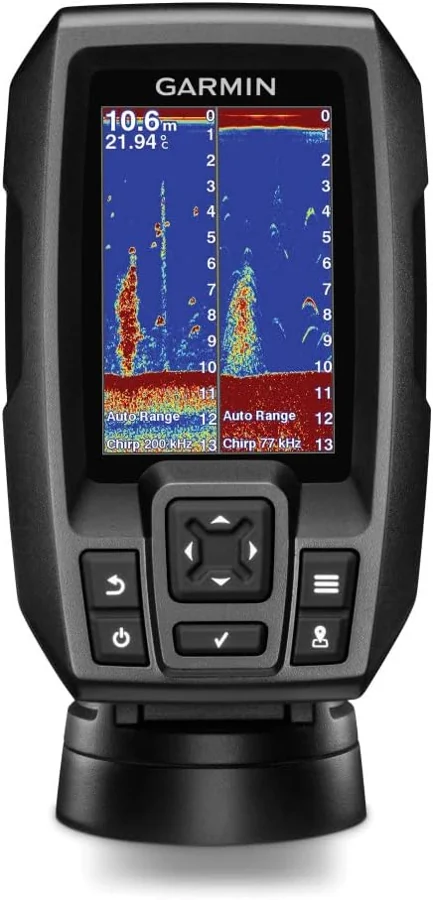
A basic unit is enough. The STRIKER 4 is a small CHIRP fishfinder with GPS. It shows depth, bottom hardness and fish, and its speed readout lets you check your drift. Its listed tradeoffs are a 3.5-inch screen that is hard to read in direct sun with polarized glasses, and no charts, so use a chart on your phone or paper for navigation. For more on what a Great Lakes boat needs from sonar, see Sonar for the Great Lakes.
Set the unit to show bottom clearly and use bottom zoom if marks are hard to separate. Keep enough of the water column visible to notice fish holding above the sinker.
Drift first, then anchor
Drift to search when conditions allow you to hold the rig near vertical. Watch the screen and note where bites come. When you catch a perch, mark the position and depth.
Then pick one of two plays.
- Keep drifting if the school is spread along a long flat. Motor upwind of the waypoint, shut off, and drift back across it. Repeat.
- Anchor or hold if the fish are tight to a small spot and the bites die the moment you leave it. Set the anchor upwind so the boat settles over the marks.
Anchoring on Erie is a wind call. Check the marine forecast before leaving and keep watching conditions. If you anchor, use a suitable anchor and line from the bow; leave before wind or waves make retrieval unsafe. A drift sock can slow the boat; size it for the boat and conditions.
Whichever you pick, keep your line near vertical. When the boat drifts faster than the sinker can hold, the rig swings off the bottom and the bite drops off.
The spreader rig
A spreader rig has two short hook leaders held apart above a sinker. Some versions use wire arms; others use a line frame. The separation helps the baits drop without wrapping the main line. The site’s perch spreader rig page shows the type of terminal tackle to look for. Check the hook rules for the water you fish before rigging.
For a first trip, choose a two-hook rig where permitted. It is easier to manage and unhook in a moving boat than a rig with more hooks.
Use a small hook. Perch have a modest mouth, and a hook that is too big misses the bite entirely. Match the hook to the bait: a shiner hooked once through the lips or back, a minnow hooked the same way. Keep the dropper short enough that it does not wrap the main line on the drop.
Check the rig after every fish. Slime, scales and a frayed dropper cost you bites without telling you.
Minnows or emerald shiners
Emerald shiners are a common Erie perch bait. Small minnows are another option when shiners are unavailable. Hook either lightly so it can move, and replace a bait that no longer presents well.
Keep live bait in a cool, shaded, aerated container. Bait rules differ by state, including what you may collect and how you may move live bait, so check the agency pages in the sources below before you buy or net any.
If bites stop, check the bait and make another pass through the marks before changing locations.
Sinker weight, depth and wind
You need a sinker heavy enough to hold bottom while the boat drifts, and no heavier. A bank or bell sinker on the bottom of the rig is the usual choice. Start with a weight that lets you feel bottom on the drop, then move up in size if the rig swings back toward the boat or lifts as you drift.
Deeper water and faster drift both call for more weight. Wind pushes the boat, and the boat drags the rig. If your line angles far behind you, bottom contact becomes harder to judge. Add weight or slow the drift with a sock, then check the rig’s position again.
A lighter sinker can make a bite easier to feel; a heavier one can help keep the line vertical in a faster drift. Carry several sizes, because the useful weight can change as wind and depth change. If conditions outrun what your small boat can fish safely, head in.
Lift the rig a few inches off bottom between bites. Perch often hit a bait hanging just above the mud rather than one dragged through it.
Rod and line
A medium-light spinning rod gives you the feel for a perch bite and enough backbone to lift a sinker from 40 feet. Pair it with a small spinning reel and light line.
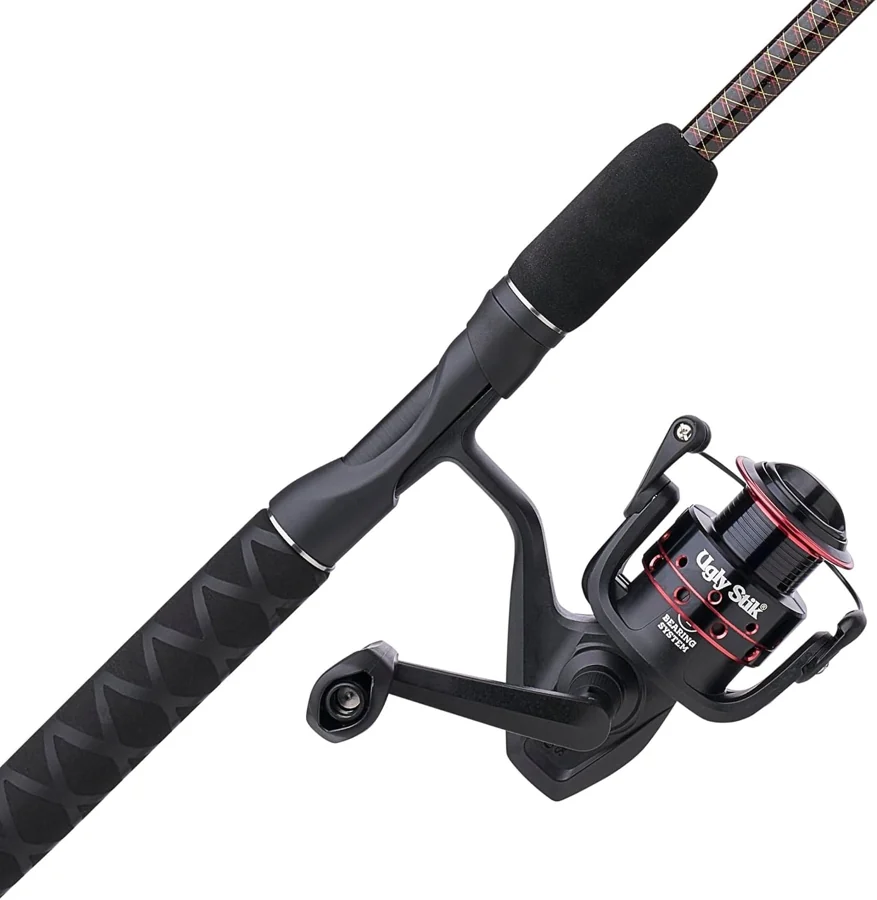
The Ugly Stik GX2 Spinning Combo is a rod and reel set. The catalog notes that it can serve as a perch spare, while its heavier feel and rougher included reel make subtle bites harder to detect. Check the exact combo’s rod rating against the sinker you plan to use.
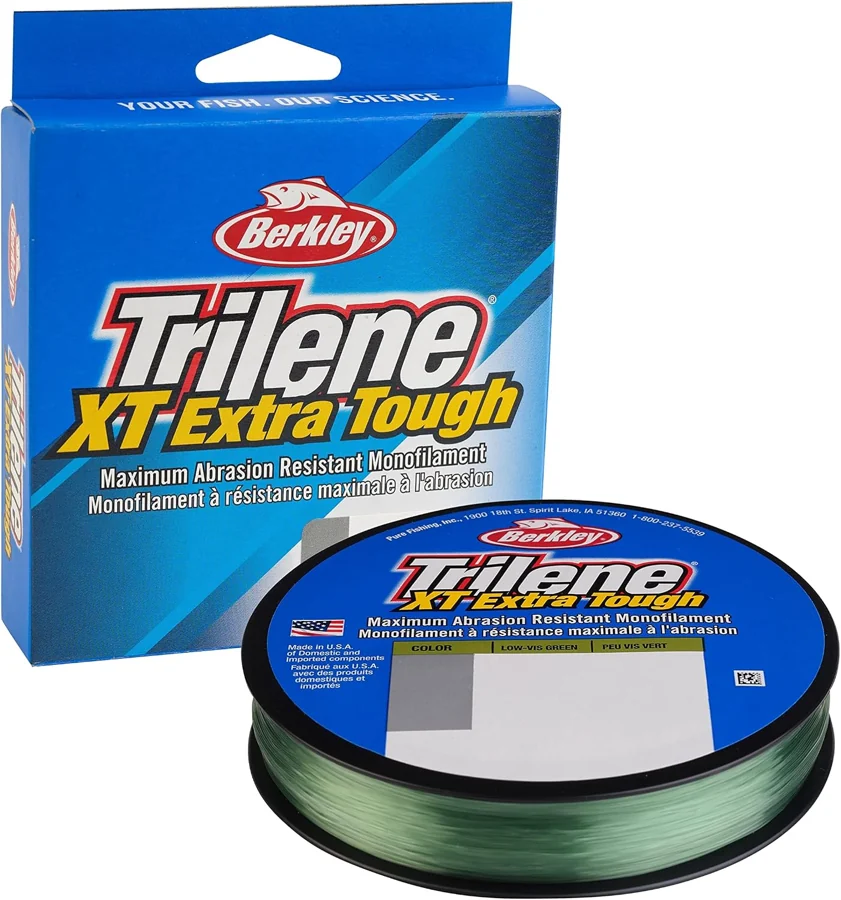
For line, mono offers some stretch and is easy to handle on a bottom rig. Trilene XT Monofilament is one catalog option. Braid, such as Super Slick V2, transmits light taps with less stretch; a mono or fluorocarbon leader adds some give near the hooks. Match line strength to your rod and rig.
Getting the catch home
Bring a cooler with ice and chill fish as you keep them. The Tundra 65 is a large option, but its listed empty weight is about 30 pounds; check its space and lifting needs against your boat. A smaller cooler may suit a short trip and the catch you are permitted to keep.
The fillet and cold chain kit lays out a full setup for cleaning and cooling fish.
Before you keep anything, check the current rules. Limits, size rules and seasons for Erie perch are set separately by Ohio, Pennsylvania and New York and change from year to year. Read the Ohio DNR, Pennsylvania Fish and Boat Commission and New York DEC pages linked below for the water you are on. For more on the species, see yellow perch on Lake Erie.
Compare the gear for this guide
As an Amazon Associate we earn from qualifying purchases. Check the exact model, size and current availability on Amazon before buying.
STRIKER 4 Fishfinder
- Good fit for
- yellow perch, walleye, smallmouth bass
- Why consider it
- CHIRP sonar performance well beyond what $120 suggests
- Keep in mind
- The screen is 3.5 inches and effectively unreadable in direct sun with polarized glasses
- Before choosing
- Check power supply, mounting hardware and transducer compatibility.
Ugly Stik GX2 Spinning Combo
- Good fit for
- yellow perch, walleye, smallmouth bass
- Why consider it
- Genuinely close to unbreakable — the clear tip design has survived four decades of abuse
- Keep in mind
- The included reel is the weak half — the drag is stepped and rough, and it will not survive a big king off a pier
- Before choosing
- Match rod length, power and lure rating to your technique and reel.
Trilene XT Monofilament (10lb, 300yd)
- Good fit for
- walleye, chinook salmon, coho salmon
- Why consider it
- Selected 10lb, 300yd low-vis-green Trilene XT
- Keep in mind
- Availability can change; confirm the exact selection and included components before ordering
- Before choosing
- Check hook size, line strength and weight before assembling the rig.
Mentioned above
Gear from this guide
STRIKER 4 Fishfinder
A tiny, cheap CHIRP fishfinder that does the one job — tell you the depth and whether anything is down there.
Ugly Stik GX2 Spinning Combo
The rod you hand a kid, keep as a pier spare, and never worry about again.
Trilene XT Monofilament (10lb, 300yd)
Selected 10lb, 300yd low-vis-green Trilene XT
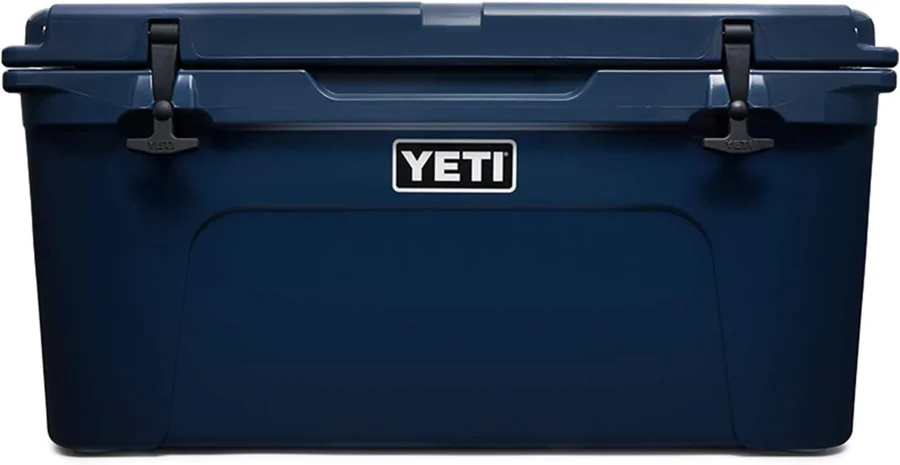
Tundra 65 Cooler (Navy)
A large rotomolded cooler for trips that need more ice and fish space; check its 23.3-inch interior length before choosing it for a whole fish.
Questions
- What is a perch spreader rig?
- It is a rig with two short, separated hook leaders above a sinker. The spreader keeps the baits apart as they drop. Check the hook rules for the water you fish before using any multi-hook rig.
- Should I drift or anchor for Lake Erie perch?
- Drift until you find a school, then decide. If the fish are spread along a long mud or sand flat, keep drifting. If they are tight in one spot, anchor or hold the boat there and fish straight down.
- What bait is better for Erie perch, minnows or emerald shiners?
- Emerald shiners are a common Erie perch bait; small minnows are another option. Keep live bait cool and check your state's rules on collecting, using and transporting bait before you buy or net any.
- How many perch can I keep on Lake Erie?
- Limits, size rules and seasons are set by each state and change. Read the current Ohio DNR, Pennsylvania Fish and Boat Commission or New York DEC rules for the water you are fishing before you keep anything.
Read next
Great Lakes Thermocline: Water Temperature & Trolling Depth
How Great Lakes water stratifies, why the thermocline sets your trolling depth, and how to find the temperature break with the gear already on your boat.
Lake Whitefish: Finding and Jigging the Great Lakes' Deep-Water Staple
What a lake whitefish is, where it holds on Superior, Huron and Michigan, and how to jig one up from a deep flat through the ice or from a boat.
Ice Fishing the Great Lakes Safely
Ice thickness numbers, pressure ridges, current, and what safe ice on the Great Lakes actually means — plus the gear that gets you back off the ice.