The Mile Roads off St. Clair Shores
The grass flats from roughly 9 Mile to 14 Mile out toward the shipping channel. The most-trolled muskie water on the lake and still the most productive.
Muskellunge · Lake St. Clair
Lake St. Clair holds the densest muskellunge population on the continent, and the old line about ten thousand casts does not apply here. A competent angler on a good October day can raise a dozen fish and boat several.
Prime time
June through mid-November, with October and early November the trophy window
Depths
8–16 ft over cabbage and sand; 18–24 ft along the shipping channel edges in late fall
Typical size
38–46 inches
Lake max depth
27 ft
Where
The grass flats from roughly 9 Mile to 14 Mile out toward the shipping channel. The most-trolled muskie water on the lake and still the most productive.
The shallow northeast corner off New Baltimore. Warms first, holds early-season fish in 6–12 ft, and fishes well for casting when the main lake is rough.
Behind the delta islands. Weedy, protected, and the best casting water on the lake for anglers who would rather throw a bucktail than pull boards.
The dredged break from roughly 12 ft to over 20 ft. Late fall staging water. It is an active seaway channel — freighters have right of way and cannot maneuver.
Heavy current over hard bottom where the lake drains. November fish stage here, and they are the biggest of the year.
The Ontario side of the lake. Same grass-flat structure, different pressure. A passport and a valid Ontario licence are required — plan that before you cross the line.
How
The dominant St. Clair program from June through November. Big-lipped crankbaits and jointed baits run 60 to 120 feet back, spread wide on boards, at 3.5 to 5.0 mph over 9 to 15 feet of grass. Faster than most muskie anglers troll anywhere else — the speed is what triggers these fish. Slow to 3.0 mph once water drops below 50°F.
June through September in Anchor Bay and Muscamoot. A 10-inch rubber bait, cast, allowed to sink to just above the cabbage, and retrieved with a steady sweeping pull. Heavy rod, 80 lb braid, a fluorocarbon leader of at least 100 lb test. Fish it slow enough that the tail is working and fast enough that it stays above the weeds.
July and August, 8 to 14 feet. A big double-bladed bucktail burned back just under the surface. The fastest way to cover a grass flat and the technique that produces the most follows, which is the point — a follow tells you the fish are there.
Not optional on this lake. Every single cast ends with the rod tip in the water and the bait swept in a wide, deep figure-eight beside the boat, with real turns — not a lazy circle. A large share of St. Clair muskie eat within six feet of the hull. If you stop the bait at the rod tip, you will never know how many followed.
Late October and November, over 16 to 24 feet where the dredged channel breaks. Larger baits, slower speeds around 3.0 mph, and long passes along the edge. The heaviest fish of the year come off this pattern.
Muskellunge earned the nickname “fish of ten thousand casts” on lakes where the population is thin and stocked. Lake St. Clair is not that lake. It supports a naturally reproducing muskellunge population at a density nothing else on the continent matches, and it does it in 430 square miles averaging eleven feet deep.
The practical consequence: this is the water where an angler who has never caught a muskie can realistically catch one. Not guaranteed, but genuinely likely on a good October day with a competent guide.
Everything a muskie needs is here in one shallow bowl. Thousands of acres of submerged cabbage and eelgrass for ambush cover. A hard sand and gravel bottom. Constant current through the system from the St. Clair delta down to the Detroit River, keeping water oxygenated and moving food. An enormous forage base of gizzard shad, emerald shiners, perch and gobies.
And critically, the St. Clair Flats delta at the north end — a huge complex of marsh, channel and vegetation that functions as a nursery. That is why this population reproduces naturally instead of depending on a hatchery truck.
Most St. Clair muskie are caught trolling, and the speeds surprise anglers coming from northern Wisconsin or Minnesota. Three and a half to five miles an hour is normal here. Slower does not produce.
The spread: big crankbaits and jointed baits, 60 to 120 feet back, pushed out to the sides on planer boards so you cover a hundred-foot swath of grass flat rather than a boat width. Depth is 9 to 15 feet over the cabbage. The boards get the baits away from the hull, which matters in water this shallow and this clear.
The Mile Roads flats off St. Clair Shores are where most of it happens. Long passes, turns at the end, and a constant read on where the grass is at the right height — you want the bait tracking just above it, not fouling in it.
The trolling fleet catches more fish. The casting is more fun, and in Anchor Bay and Muscamoot Bay it works.
Two baits cover it. A big rubber bait — ten inches or more — cast, counted down to just above the cabbage, and pulled back with steady sweeps. And a large double- bladed bucktail burned just under the surface to cover water fast and generate follows.
Tackle is not a place to economize: heavy casting rod, 80 lb braid, and a leader of at least 100 lb test. A fish lost to a bitten-off leader swims away with a bait in its mouth.
This is the technique that separates people who catch St. Clair muskie from people who fish for them. A large share of these fish follow the bait to the boat and eat in the last six feet.
Every cast ends the same way: rod tip driven into the water, bait swept in a wide figure-eight with genuine hard turns — a foot or two of radius on the turn, not a lazy oval — and at least two full passes before you lift. Do this on every cast, including the hundred casts where nothing has followed, because you will not always see the fish behind the bait in stained water.
October and early November are when the biggest fish of the year come off this lake. Water drops through the 50s into the 40s, the grass lays down, and the fish move toward the shipping channel edge and the current at Peche Island and the head of the Detroit River.
Slow the trolling speed to around 3.0 mph, go to bigger baits, and work the 16- to 24-foot channel break. It is cold, windy work on a lake that has no shelter, and it produces fifty-inch fish.
This is a release fishery in practice and the population’s health depends on it. Keep the fish in the water, use a big cradle or rubber-coated net as a holding pen, and unhook with long pliers or a cutter while the fish is submerged. In warm summer water the whole sequence should take under a minute. Hold the fish upright into a slow idle until it kicks free on its own.
Eleven feet of average depth means St. Clair builds a steep chop in a 20-knot wind with no lee shore anywhere on a nearly round lake. There is no deep water to absorb it. Combine that with a fall trolling program that keeps you out at dusk and it is a serious boat.
The shipping channel is the other hazard. It cuts through the middle of the lake, it carries commercial freighter traffic, and those vessels cannot alter course for a trolling boat. Know where the channel is, monitor the VHF, and stay off the lane.
Michigan and Ontario both manage Lake St. Clair muskellunge and each sets its own season, size and possession rules — which have differed from one another on the same lake. They change. Read the current guide from the agency whose water you are fishing.
Where to put in
Dark marks are launches named in this guide. Generalized shoreline, not for navigation.
Kit
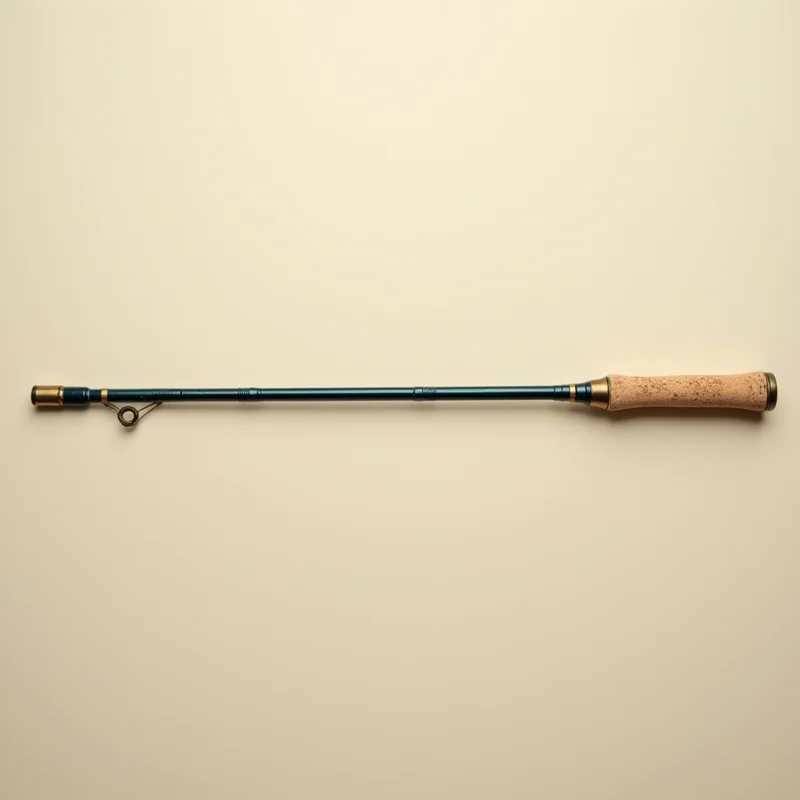
An 8-foot heavy musky stick that throws big rubber all day and still lets you finish a proper figure-eight boatside.
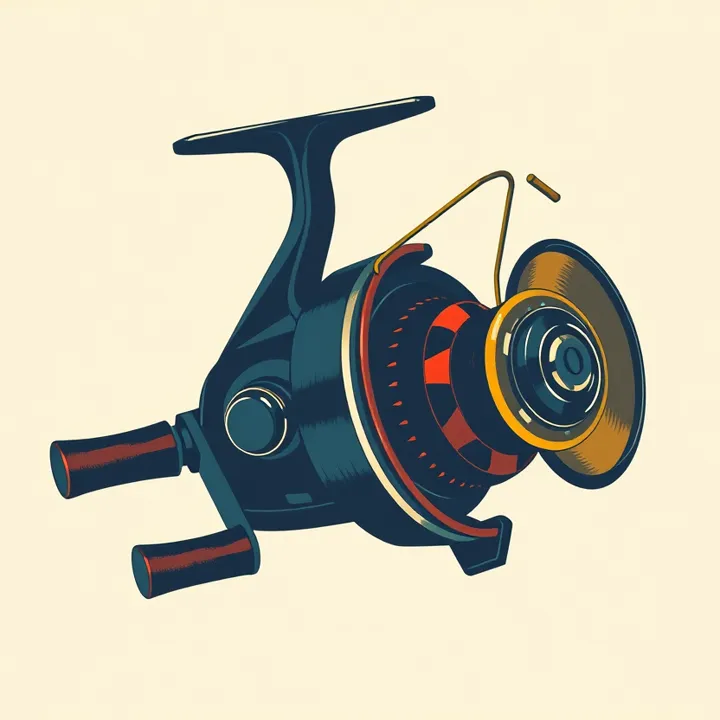
A round baitcaster built to throw 10-ounce rubber a thousand times a day and still have drag left for a 50-inch fish.
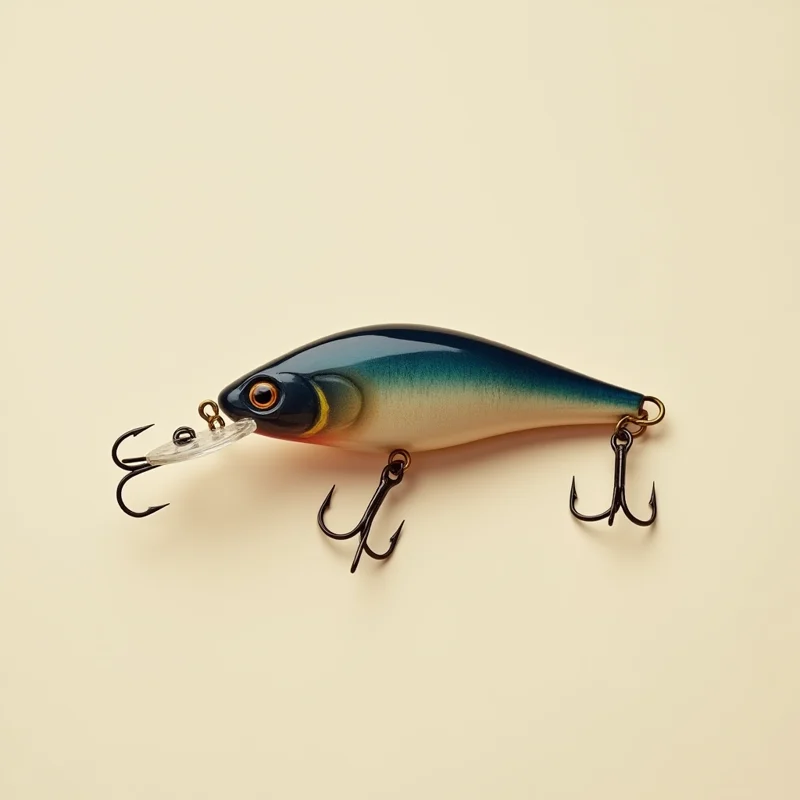
A big rubber bait with four independently moving tails that can be fished fast, slow, or as a slow-sinking glide.
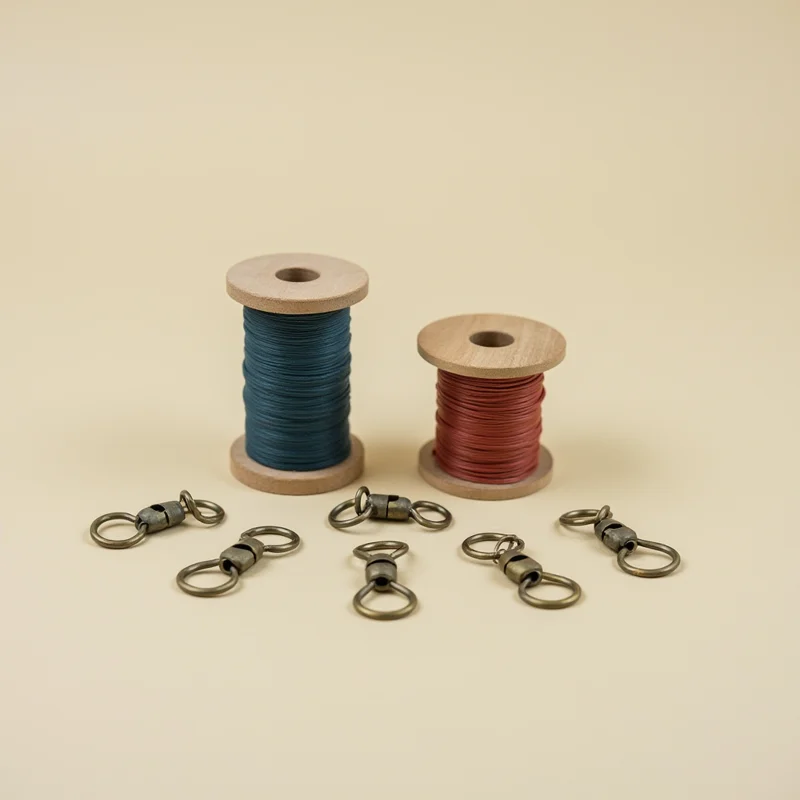
The leader that stands between a Lake St. Clair muskie's teeth and your line, in the fluorocarbon that clear water demands.
A hoop big enough to take a fifty-inch St. Clair muskie without folding it, with a deep coated bag that becomes a holding pen boatside.
Questions
Same fish, other water
Size limits, bag limits, and open seasons for muskellunge on Lake St. Clair are set by Michigan DNR and change from year to year. Check the current rulebook before you keep a fish.
Sources
Last updated 2026-09-01