Start with the rulebook
Lake sturgeon are protected across nearly all of Lake Huron. Some waters are
closed to sturgeon fishing entirely, some are catch-and-release only, and the
handful of places where any harvest occurs are managed under hard quotas with
registration requirements and immediate in-season closures. The specifics differ
by water and are revised.
Read the current Michigan DNR regulations for the exact water you intend to fish
before you leave the driveway. Everything below assumes the fish goes back.
What Huron lost
Lake Huron was once one of the great sturgeon waters on the continent. Saginaw
Bay and its tributaries, the Cheboygan system, the St. Marys River and the
northern bays all carried substantial spawning runs. Nineteenth-century
commercial fishing removed most of the adults — sturgeon were killed for isinglass
and for oil, and for a period simply destroyed as a nuisance that fouled nets.
Then the dams went in, and the rivers they needed to spawn in were closed to
them.
By the middle of the twentieth century the Great Lakes population as a whole was
down by roughly 99 percent. Huron’s losses were among the worst because so much
of its spawning habitat was in tributaries that got dammed.
What remains, and where
The Cheboygan watershed, including Black Lake, holds the best-known population
connected to Huron and the most intensively studied. Black Lake’s sturgeon have
been monitored, tagged and rehabilitated for decades, and its short winter season
— run on a strict quota that can close the fishery within hours — is a genuinely
unusual piece of American fisheries management.
The St. Marys River, the Les Cheneaux area and Munuscong Bay hold fish in the
northern lake. Saginaw Bay is the subject of long-running rehabilitation work
aimed at rebuilding a run that dams effectively ended. Thunder Bay produces
occasional fish.
None of these add up to a general sturgeon fishery. They add up to a species
hanging on in specific places under close watch.
A hundred-year fish
Lake sturgeon can live past a century. Males take about fifteen years to mature,
females twenty or more, and a mature female spawns only every three to five
years. Every large fish in Lake Huron predates most of the people fishing over
it, and it represents decades of successful survival that cannot be replaced on
any human timescale.
They are also unchanged in form from something very old: bony scutes rather than
scales, a cartilage skeleton, four barbels beneath a mouth that extends like a
vacuum hose. They cruise the bottom, drag the barbels, and inhale what registers
— insect larvae, mollusks, crayfish, and in the modern lake a great many round
gobies.
Handling — the part that decides whether the fish lives
Never lift a lake sturgeon vertically. Not by the head, not by the gill
plate, not on a lip gripper, and never on a hanging scale. A sturgeon’s body is
long, heavy and supported along its entire length by water, and its skeleton is
cartilage. Hanging one vertically tears internal connective tissue and organs.
The fish swims away and dies later, which is worse than obvious harm because
nobody learns anything from it.
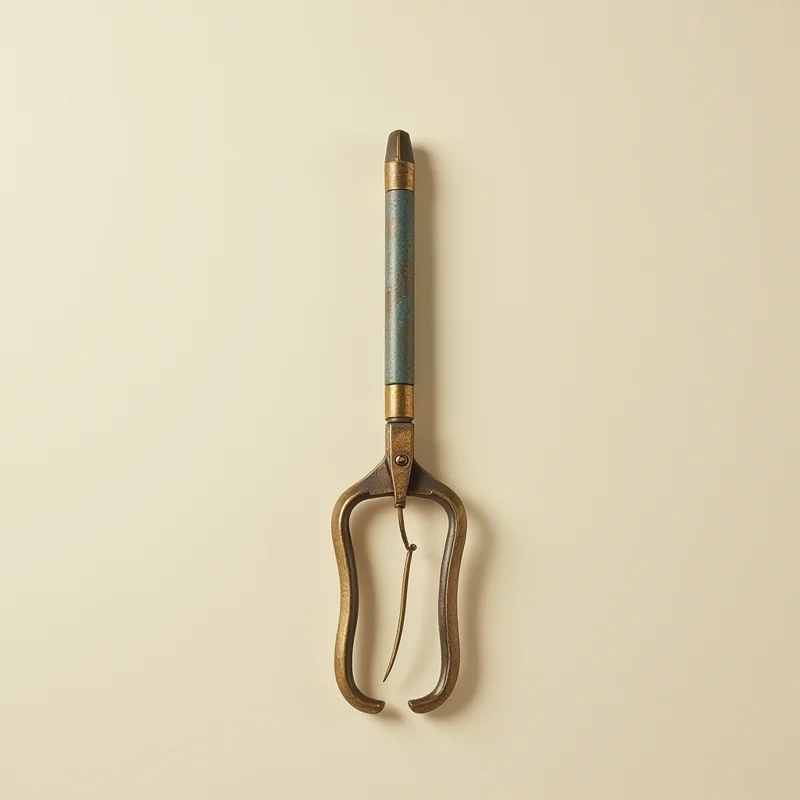
Keep it horizontal. Keep it wet. Unhook it alongside the boat with long pliers if
you can. If you lift it for a photograph, get both arms fully under the body,
stay low over the water, and count the seconds — fewer than ten. Measure it on a
board rather than weighing it; length is the number that matters and it does not
require you to hang the fish. Then hold it upright in the water, moving forward
gently, until it pulls out of your hands on its own.
If the fish carries a tag, write down the number and report it. Those reports are
a real part of how these populations are tracked.
The long view
Lake St. Clair’s sturgeon population — connected to Huron through the St. Clair
River — is the strongest in the Great Lakes and the proof that recovery is
possible where the habitat survived. Huron’s story is less finished. Its
tributaries are still coming back, and every fish handled correctly in the
meantime buys another few decades of possibility. That is the whole deal with a
century-lived fish: the payoff is not in your season.