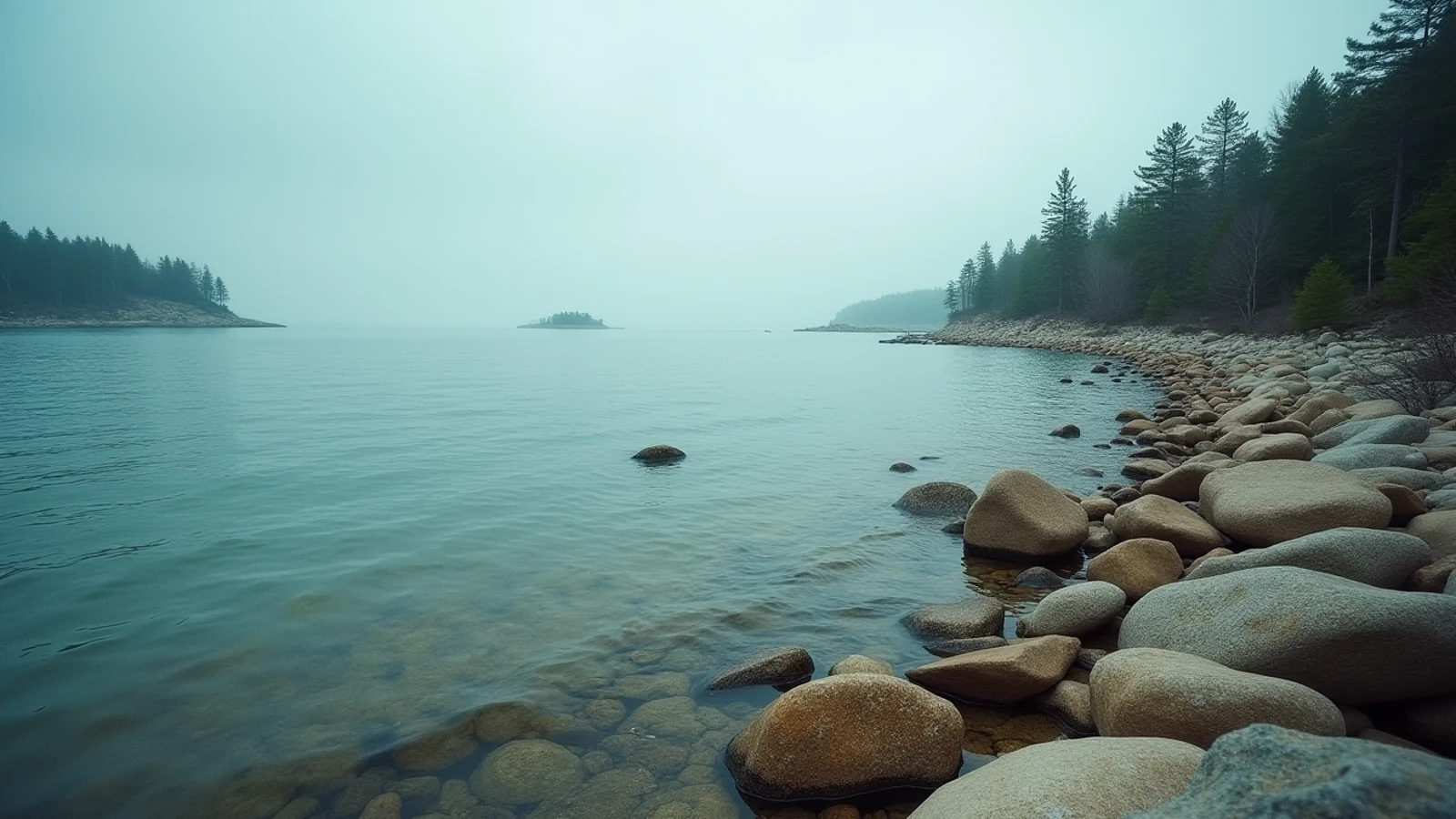
park · Lake Huron · est. 2000
Thunder Bay National Marine Sanctuary
A 4,300-square-mile protected shipwreck field off Alpena, Michigan, in Lake Huron, with wrecks in water shallow enough to snorkel.
Thunder Bay is the reason people talk about “Shipwreck Alley.” The stretch of Lake Huron off Alpena sits where a busy nineteenth-century shipping lane crosses shoals, fog banks and sudden weather. Ships piled up here for a hundred years. NOAA designated the sanctuary in 2000 and expanded it in 2014 to about 4,300 square miles covering Alpena, Alcona and Presque Isle counties.
Roughly 100 wrecks are documented inside those boundaries and the working estimate is closer to 200. What makes them matter is not the count. It is the condition.
Why the wrecks look like that
Lake Huron is fresh, cold and dark below the thermocline. There are no shipworms in fresh water — the mollusc that eats every wooden hull in the ocean simply does not live here. So a schooner that went down in 1894 still has its masts standing, its deadeyes in place, its cargo where it settled. Divers who have worked both oceans and the Great Lakes will tell you these are the best-preserved wooden wrecks anywhere.
The depth range runs from a few feet to over 200. That spread is what opens the sanctuary to people who do not dive.
How to actually see one
From a glass-bottom boat. Tours run out of Alpena’s harbor in the summer season and put you over shallow wrecks with the hull structure visible through the water.
By snorkel or kayak. Several wrecks sit in less than 20 feet. The Portsmouth and the Albany lie in shallow water near shore. On a calm, clear day you can float over ribs and planking with a mask.
By scuba. Charter operators in Alpena run the intermediate and deep sites. Mooring buoys are set on many wrecks in season. The deep sites are technical dives in cold, dark water and are not a vacation checkbox.
On land, for free. The Great Lakes Maritime Heritage Center in Alpena costs nothing to enter, has a full-scale reconstructed schooner section you walk through, and lays out the whole story with recovered artifacts. If you do one thing here, do this.
When to go
June through September. Water clarity is best in early summer before algae blooms and after spring runoff settles. Late August and September bring the calmest surface days on this part of Huron.
Water temperature below the surface layer stays in the 40s Fahrenheit all season. Snorkelers should be in a wetsuit even in August. Divers need proper thermal protection and should treat these as cold-water dives regardless of what the surface reads.
Before you turn up
The Heritage Center is free and open year-round with seasonal hours; the theater and exhibits are worth two hours.
Removing, disturbing or anchoring into a wreck is prohibited. These are protected archaeological sites, and the sanctuary enforces it. Use the mooring buoys.
Weather is the whole game on Lake Huron. The same conditions that sank these ships still show up: fog rolls in fast off cold water, and a northeast wind stands the bay up in a hurry. Check the NOAA marine forecast for the Alpena zone the morning of, not the night before, and be willing to lose the day.
Alpena is also a fishing port. Thunder Bay and the reefs off Presque Isle hold lake trout and walleye, and the DNR runs an active lake trout program on this side of Huron. Charter captains here work both trades — some of the same boats run divers in the morning and troll in the afternoon. Michigan DNR sets seasons and limits, and they change annually.
What you came for
- Roughly 100 known wrecks inside sanctuary waters, with the total estimated closer to 200.
- Cold, fresh Lake Huron water preserves wooden hulls, deck fittings and cargo in a condition no saltwater wreck matches.
- Several wrecks lie in under 20 feet of water and can be seen by snorkel, kayak or glass-bottom boat.
- The Great Lakes Maritime Heritage Center in Alpena is free and holds a full-scale schooner section and a shipwreck gallery.
- Glass-bottom boat tours run out of Alpena in summer; charter dive operators serve the deeper sites.
Lights on this shore
- Alpena Light0.5 mi · est. 1875
- Middle Island Light11 mi · est. 1905
- Thunder Bay Island Light12 mi · est. 1831
- Old Presque Isle Light19 mi · est. 1840
Swimming here
These beaches are on the state’s federal beach list, with the water-testing record and a link to today’s advisories:
- Thompson Park (Alpena County)0.6 mi
- Bay View Park0.8 mi
- Blair Street Park0.9 mi · water sampled
- Starlite Beach1.2 mi · water sampled
- Michekewis Beach1.5 mi
Sources
Last updated 2026-09-01