park · Lake Superior · est. 1849
Tahquamenon Falls and Whitefish Point
Michigan's largest waterfall and the Lake Superior point that guards Whitefish Bay, an hour apart on the eastern Upper Peninsula.
These are two places about an hour apart on the eastern end of Michigan’s Upper Peninsula, and they belong on the same day because they are the same story: water coming off the Superior watershed, and the shipping that had to survive it.
Tahquamenon Falls
The Upper Falls drop roughly 50 feet over a crest about 200 feet wide. In spring melt the river pushes more than 50,000 gallons a second over that lip. It is the largest waterfall in Michigan and among the largest east of the Mississippi by volume.
The color is the thing people ask about. The water is amber-brown, sometimes near root beer, and the foam on the plunge pool is tan. That is tannin — organic acid leached out of the hemlock and cedar swamps the river drains. It is not pollution and it is not silt. The river has run that color as long as anyone has written it down.
The Upper Falls has two viewing areas off a paved path from the parking lot: a brink overlook where you stand at the edge of the crest, and a gorge overlook reached by a stairway of just under 100 steps. A newer accessible platform serves visitors who cannot take the stairs.
The Lower Falls, four miles downstream, is a different animal — a series of cascades split around an island. You can rent a rowboat in season and pull yourself across to the island, or take the footbridge, and in low summer water people wade the shallow shelves.
Tahquamenon Falls State Park covers about 50,000 acres. The River Trail runs the four miles between the two falls, one way, through old-growth hemlock. It is a real hike, not a stroll.
Whitefish Point
Twenty-some miles north, the point sticks out into Lake Superior and forms the western gate of Whitefish Bay. Every ship running down from Duluth or Thunder Bay toward the Soo passes it. The light went in in 1849 and it is the oldest one still operating on Superior.
The Great Lakes Shipwreck Museum sits on the same ground. Its centerpiece is the bell of the Edmund Fitzgerald, recovered in 1995 from the wreck lying 17 miles northwest in 530 feet of water. The Fitzgerald was running for the shelter of Whitefish Bay on 10 November 1975 when she went down with all 29 hands. She never made the point. The museum handles that plainly and it lands.
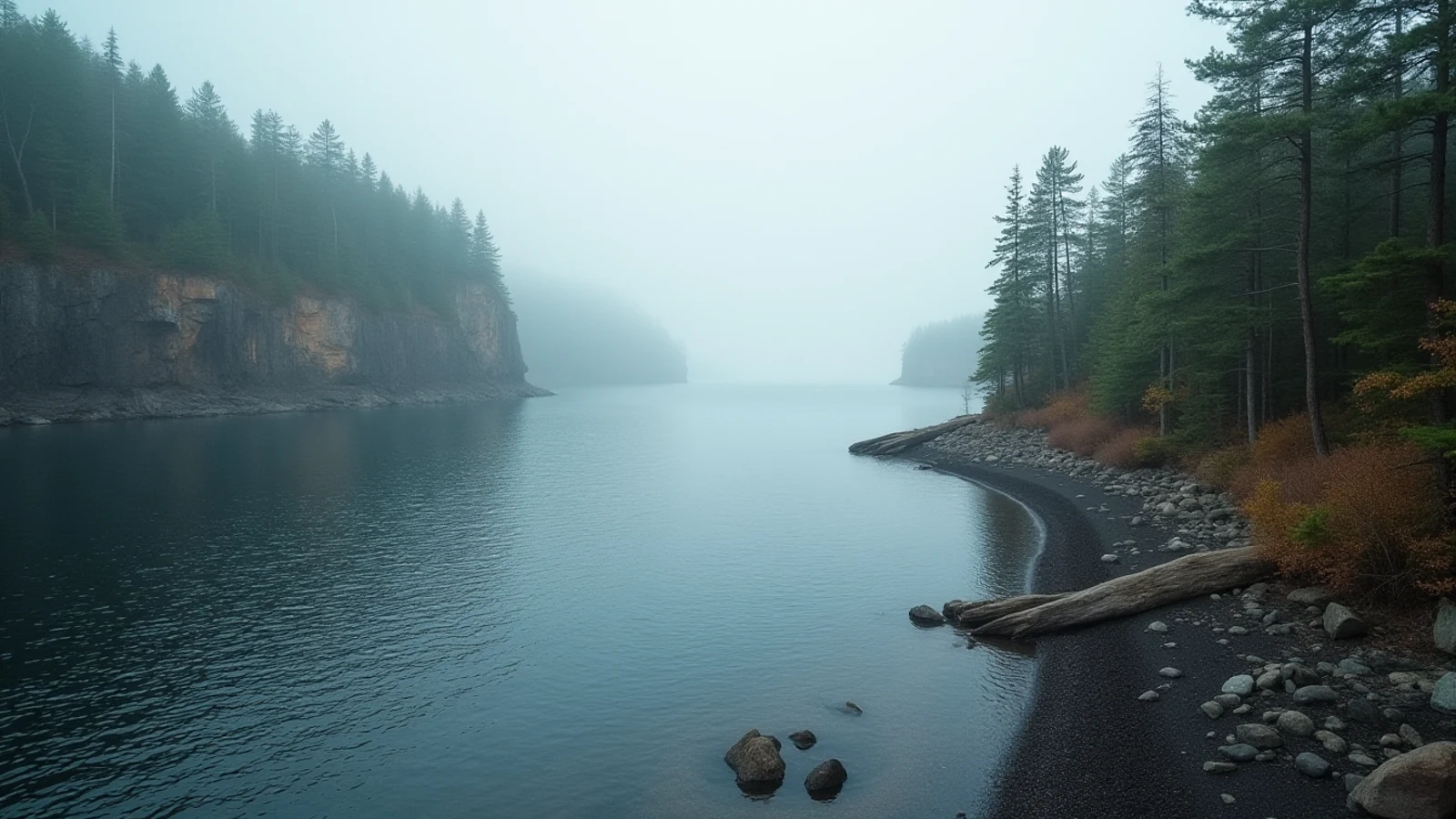
The beach at the point is cobble and driftwood, wide open to the north, and the water is Superior-cold every day of the year. The bird observatory here is one of the better spring raptor watches in the country — the point funnels migrants that will not cross the open lake.
Before you turn up
A Michigan Recreation Passport is required for the state park; nonresidents buy a day or annual pass at the gate. The shipwreck museum charges separate admission and runs a seasonal schedule, roughly May through October.
M-123 is the access road for both and it is plowed in winter. The falls in winter are worth the trip — the Upper Falls partially freezes into ice columns — but the trails are snow and ice and the gorge stairs may be closed.
Blackflies and mosquitoes own June in the river corridor. Bring repellent or accept your fate. There is a brewpub at the Upper Falls lot, which is unusual for a state park and welcome after four miles of trail.
What you came for
- The Upper Falls of the Tahquamenon drop about 50 feet across a 200-foot crest — the largest waterfall in Michigan and one of the largest east of the Mississippi.
- The river runs amber-brown from tannins leached out of the cedar swamps upstream, not from silt.
- Whitefish Point Light has marked the entrance to Whitefish Bay since 1849 and is the oldest active light on Lake Superior.
- The Great Lakes Shipwreck Museum at the point holds the recovered bell of the Edmund Fitzgerald, which went down 17 miles offshore in November 1975.
- Whitefish Point is a major migratory bird corridor; the observatory there logs raptor and waterbird counts every spring.
Lights on this shore
- Whitefish Point Light0.0 mi
- Crisp Point Light14 mi