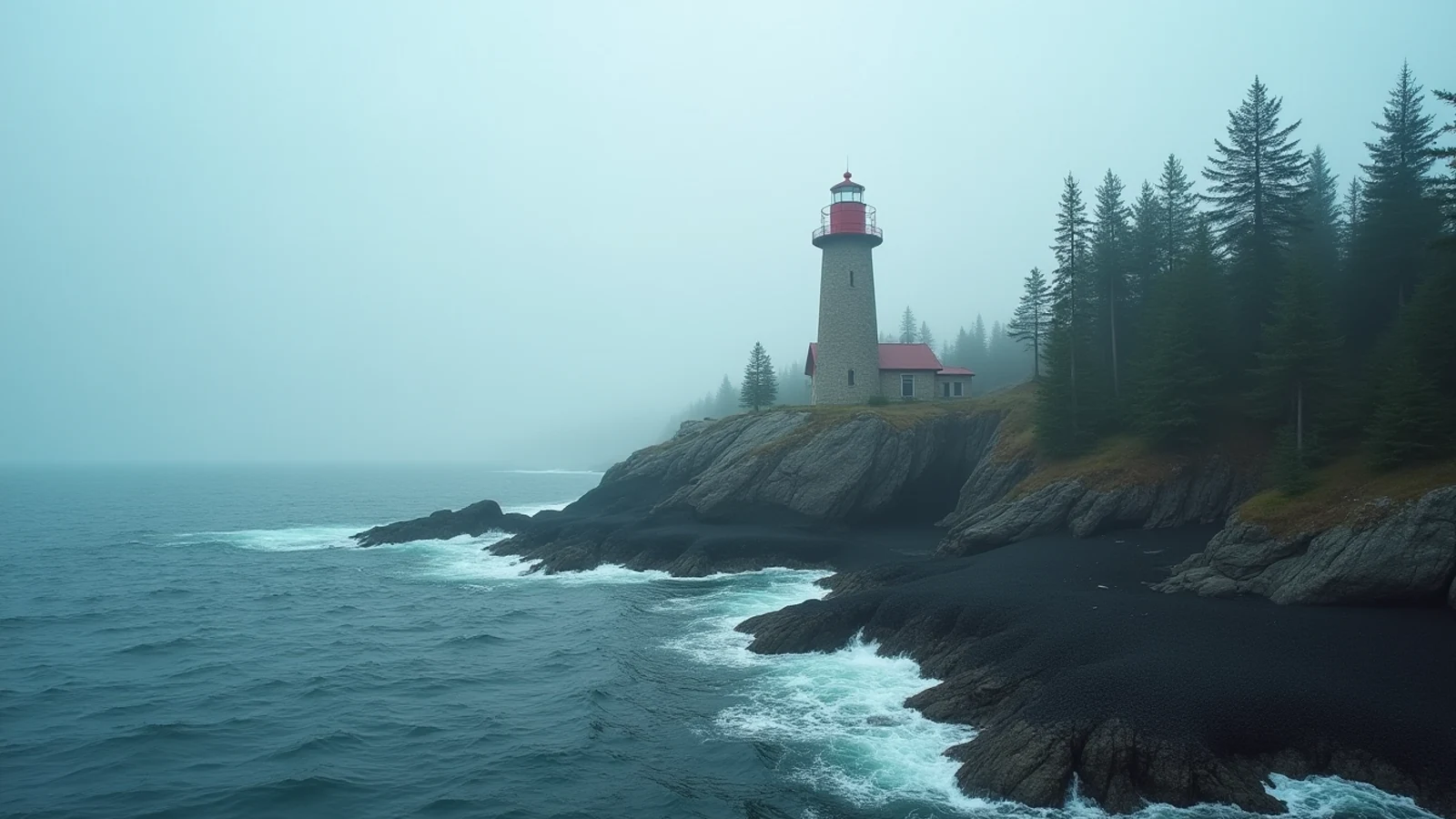
lighthouse · Lake Superior · est. 1910
Split Rock Lighthouse
A 1910 light station on a 130-foot diabase cliff above Lake Superior, built after the November 1905 gales wrecked or stranded 29 ships in a single storm.
In late November 1905 a series of gales ran across Lake Superior and left 29 ships damaged, stranded or on the bottom. One of them, the Madeira, went onto the rocks a mile and a half from where the tower now stands. The shipping industry went to Congress, Congress appropriated the money, and in 1910 Split Rock Lighthouse went into service.
It is on the North Shore of Minnesota, about 20 miles up Highway 61 from Two Harbors, standing on a sheer cliff of anorthosite — dark, hard, billion-year-old rock — 130 feet above the water. The tower itself is only 54 feet. The cliff does the work. The focal plane of the light sits over 160 feet above Superior.
There is a second reason the light was needed here beyond weather: the iron in the rock along this shore throws ship compasses off. Magnetic anomalies in the North Shore bedrock made dead reckoning unreliable exactly where the ore boats ran.
What is there
The Minnesota Historical Society operates the station as a historic site and it is one of the best-preserved light stations in the country. The original third-order bivalve Fresnel lens is still in the lantern, floating on a mercury bed and driven by a clockwork weight system. Interpreters run it.
Three keeper’s dwellings, the fog signal building with its compressed-air diaphone plant, and the oil house are all restored to about 1920. Staff work in period and answer questions as keepers.
The station was automated and then decommissioned by the Coast Guard in 1969. It is lit ceremonially once a year, on the evening of 10 November, and the names of the 29 men lost with the Edmund Fitzgerald in 1975 are read as the beacon turns.
The view, and getting the postcard shot
Here is the thing people get wrong: the famous photograph of Split Rock — tower on the cliff, lake behind it — is not taken from the historic site. It is taken from the shoreline below, reached by a trail down through Split Rock Lighthouse State Park to the cobble beach at the base. That walk is worth doing and it is a separate errand from touring the buildings.
The state park surrounding the site has about 12 miles of hiking trail, including a section of the Superior Hiking Trail, cart-in campsites, and access to the Split Rock River.
When to go
Mid-May through mid-October for full operation. The buildings run reduced or closed hours in winter; the grounds and the state park stay open year-round.
Fall color on the North Shore peaks in the last week of September into early October and this is one of the most photographed places in Minnesota during it. Expect company.
Winter is the quietest and starkest version — ice on the cliff face, the lake steaming on a cold morning. Roads are plowed; the trails are not always.
Before you turn up
Two admissions apply and they are separate: a Minnesota state park vehicle permit for the park, and a Minnesota Historical Society admission for the lighthouse buildings. Buy both at the visitor center.
Parking fills on summer and fall weekends by mid-morning. There is no roadside parking on Highway 61 here.
Cliff edges in the park are unfenced in places. Superior below is in the 40s Fahrenheit most of the year. Falling in is not survivable for long, and the shoreline is rock with no exit.
The water
The North Shore is a lake trout, coho and steelhead fishery, worked from Two Harbors, Silver Bay and Grand Marais. Superior’s cold keeps fish shallower here through summer than they hold farther south on the chain, and the shoreline drop-offs come close in. Steelhead run the North Shore rivers, including the Split Rock, in spring.
Minnesota DNR sets seasons and limits, including specific North Shore stream regulations, and they change annually.
What you came for
- The tower stands on a sheer 130-foot cliff of anorthosite, putting the light itself well over 160 feet above Lake Superior.
- Built in response to the November 1905 storm that damaged or destroyed 29 ships on Superior in a matter of days.
- The original third-order bivalve Fresnel lens is still in the lantern room, restored and operating on a clockwork drive.
- Restored keeper's dwellings and the fog signal building are staffed in period by Minnesota Historical Society interpreters.
- Lit once a year on 10 November in memory of the Edmund Fitzgerald crew.
Lights on this shore
Tower height, light characteristic and National Register listing are on the Split Rock Lighthouse record in our lighthouse directory.
- Two Harbors Lighthouse19 mi · est. 1892
- Two Harbors Breakwater Light19 mi · est. 1897
Swimming here
These beaches are on the state’s federal beach list, with the water-testing record and a link to today’s advisories: