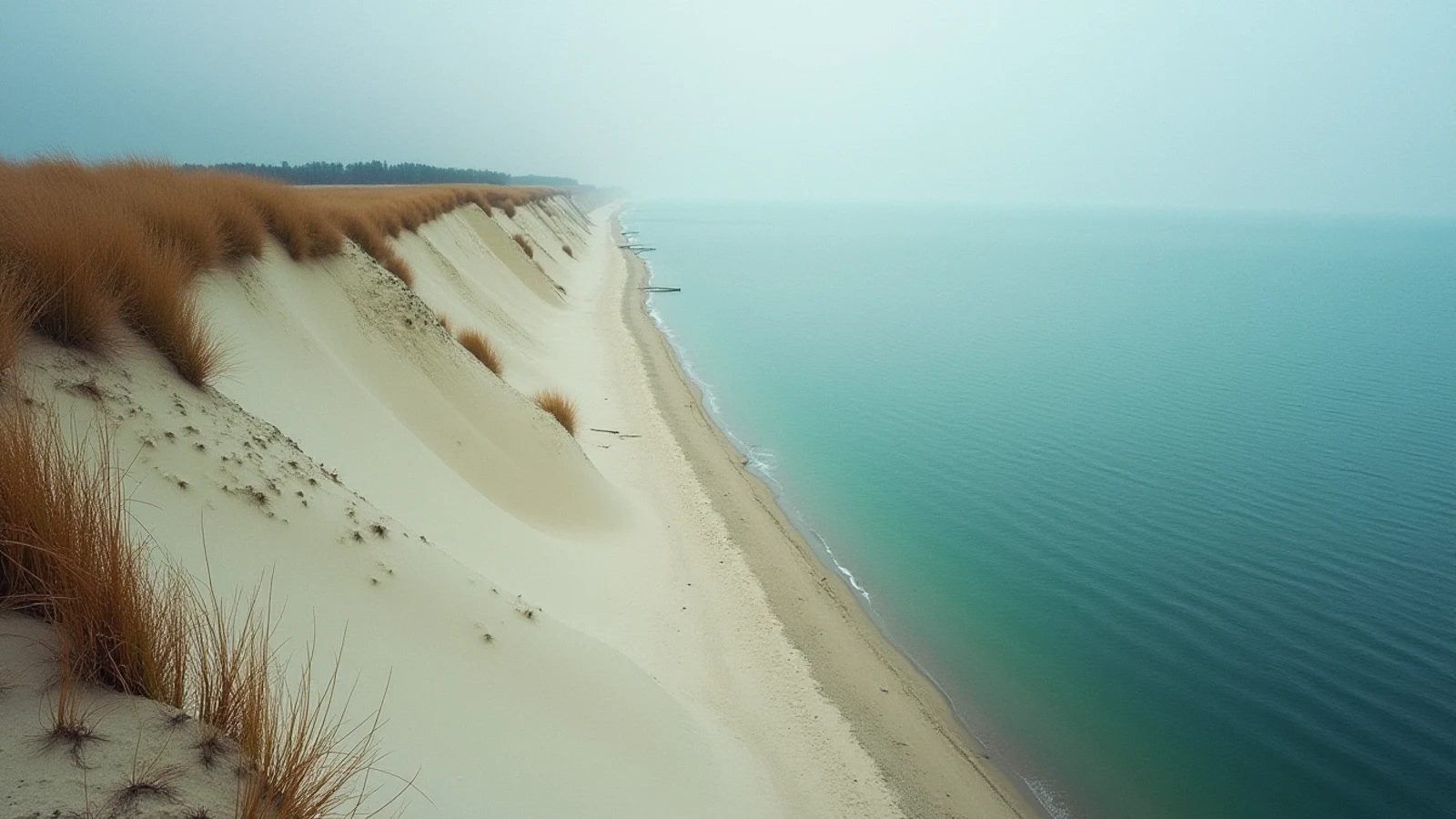
dunes · Lake Michigan · est. 1970
Sleeping Bear Dunes National Lakeshore
Perched dunes 450 feet above Lake Michigan on Michigan's northwest coast, with the Dune Climb, Pierce Stocking Drive, and 35 miles of shore.
Sleeping Bear is a perched dune complex: sand piled on top of glacial moraine, so the high ground is not the dune itself but the bluff underneath it. That is why the numbers sound impossible. At the Lake Michigan Overlook on Pierce Stocking Scenic Drive you are standing about 450 feet above the water with nothing between you and the lake but air and a slope of loose sand.
The park runs about 35 miles of mainland shoreline in Leelanau and Benzie counties, plus North and South Manitou Islands. Empire is the anchor town at the south end and holds the visitor center; Glen Arbor sits in the middle; Leland — the old fishing village with Fishtown’s shanties still standing on the Leland River — is the north gate and the ferry dock.
What you actually do here
Three things, and they are not the same trip.
The Dune Climb is the one everyone knows. It is a 260-foot wall of sand off M-109, and the climb takes most people 15 to 25 minutes. From the top, the trail keeps going over the back dunes to Lake Michigan — about 3.5 miles round trip through open sand with no shade and no water. The Park Service posts warnings about this walk for a reason. People start it in flip-flops on a July afternoon and get carried out. Bring more water than you think you need, go early, and turn around if the sand starts feeling like a treadmill.
Pierce Stocking Scenic Drive is 7.4 paved one-way miles with twelve numbered stops, including the Lake Michigan Overlook and the Cottonwood Trail. It is the low-effort version of the same views. It closes when snow arrives, usually November, and reopens in April.
The water is the third thing, and the most underrated. Glen Haven and the beach at the end of Esch Road are proper swimming beaches on the right day. There are no lifeguards anywhere in the park.
When to go
June through September for water warm enough to swim — and warm on Lake Michigan means low 60s to low 70s Fahrenheit in a good August, colder any time a north wind pushes the surface layer offshore and pulls cold water up in its place. That upwelling can drop the temperature 20 degrees in a day. October is the best hiking month: the maple and beech turn, the crowds thin, and the light off the dunes goes gold. Winter closes the scenic drive but opens cross-country skiing on the Heritage Trail.
Before you turn up
An entrance pass is required, per vehicle or per person, and it covers seven days. America the Beautiful passes work. Buy it at the Philip A. Hart Visitor Center in Empire or online — the entrance stations do not always have staff.
Parking at the Dune Climb and at Glen Haven fills by mid-morning on July and August weekends. Arriving before 10 a.m. is the difference between a lot and a two-mile roadside walk.
Cell coverage is spotty in the dune bowls and gone on the islands. If you are climbing down to the water from the Lake Michigan Overlook, understand that going down takes ten minutes and coming back up takes an hour or more. The Park Service bills for rescues off that slope, and it happens dozens of times a summer.
Two Great Lakes shipwrecks lie in shallow water inside park boundaries, and the beach at Glen Haven still has the old cannery and the Coast Guard station standing. This coast was a fueling stop for wood-burning steamers before it was a park, and the towns show it.
What you came for
- The Lake Michigan Overlook on Pierce Stocking Scenic Drive stands roughly 450 feet above the water — the steepest drop-off on the coast.
- The Dune Climb is a 260-foot sand wall; the full walk over the back side to the lake is about 3.5 miles round trip through open sand.
- The 7.4-mile Pierce Stocking Scenic Drive is one-way, paved, and closed by snow from roughly November to April.
- The Sleeping Bear Heritage Trail runs 22 paved miles from Empire to Bohemian Road for bikes and walkers.
- North and South Manitou Islands are reachable by passenger ferry from Leland in summer; South Manitou allows day trips, North Manitou is backcountry camping.
Lights on this shore
- Manning Memorial Light4.6 mi · est. 1990
- South Manitou Island Lighthouse9.0 mi · est. 1840
- North Manitou Shoal Light Station11 mi · est. 1935
- North Manitou Island Light13 mi