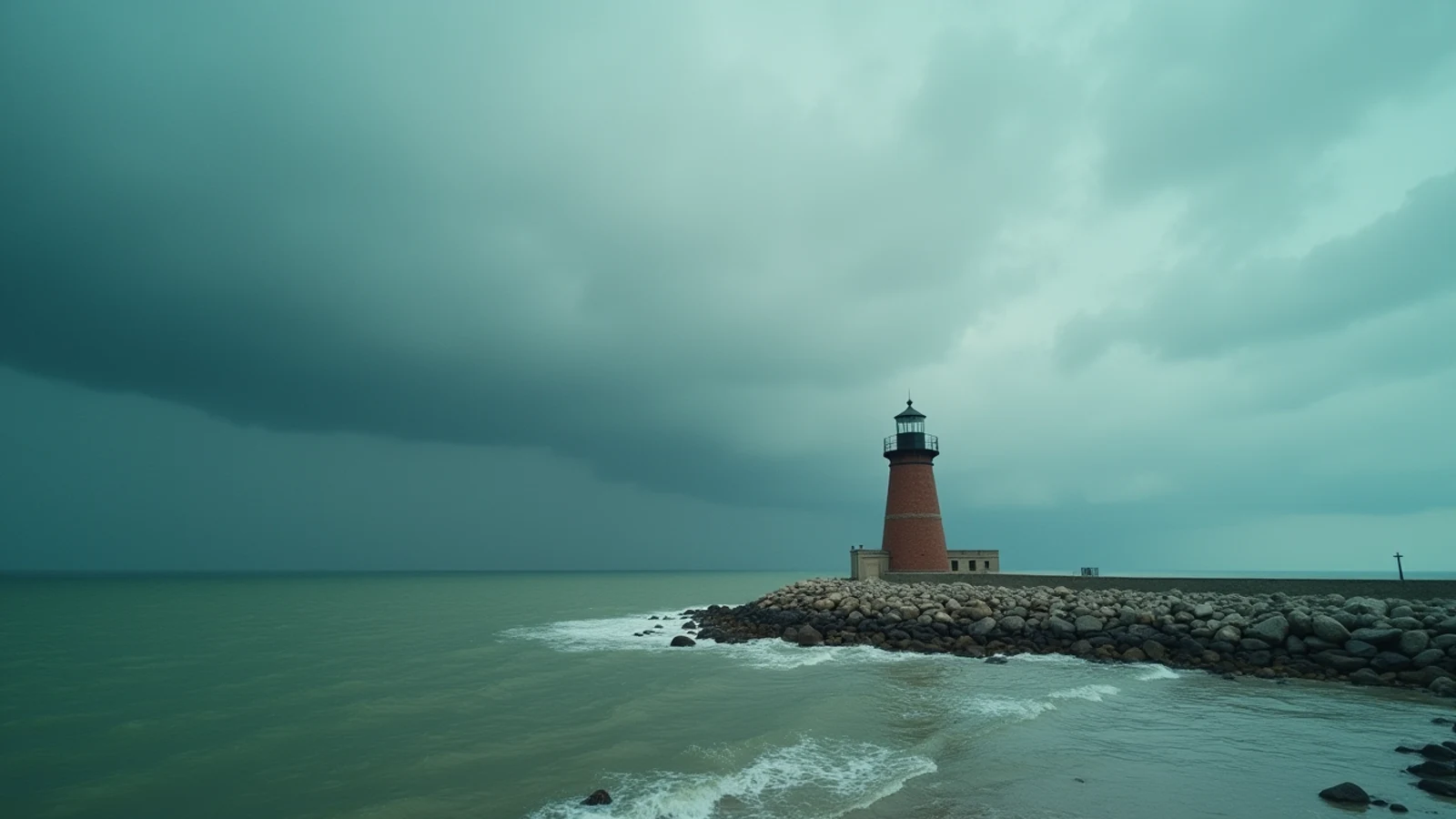
lighthouse · Lake Erie · est. 1822
Marblehead Lighthouse
The oldest continuously operating lighthouse on the U.S. side of the Great Lakes, standing on the limestone point at the entrance to Sandusky Bay, Ohio.
Marblehead has been showing a light since 1822. Nothing else on the American side of the Great Lakes has run that long without a break. The tower is native limestone, quarried nearby, 65 feet tall, standing on the rock point that forms the north side of the entrance to Sandusky Bay in Ottawa County, Ohio.
The reason it is here is the same reason the western basin is the best walleye water in North America: it is shallow. Erie averages 62 feet across the whole lake and the western basin is far shallower than that, full of reefs and rock shoals that will open a hull. Ships coming into Sandusky needed to know where the rock was.
Climbing it
Seventy-seven steps to the lantern room. The climb is run on a seasonal schedule, generally Memorial Day through mid-October, by Ohio State Parks staff and volunteers, with a small fee and a wait on busy weekends. From the top you can see across the western basin to Kelleys Island, the Bass Islands and the Cedar Point skyline on a clear day.
The keeper’s dwelling next to the tower is a museum with the station’s history and the Fresnel optics that used to sit in the lantern.
The grounds — a state park of about nine acres — are free and open year-round, and honestly the grounds are half the point. The limestone shelf runs out into the lake around the base, flat and walkable, and people spend afternoons on it with a book.
Winter
In a cold February the western basin freezes and the wind stacks broken ice against this point in slabs. Photographers come for it. Walking out on lake ice off the point is a different matter — western basin ice is notoriously variable, wind moves whole sheets, and open leads appear where there were none an hour before. Every winter the Coast Guard pulls people off drifting ice in this basin.
When to go
Late May through October for the tower. Summer weekends are the busiest hours; a weekday morning gets you the point nearly to yourself.
Sunset here faces west down the basin over open water. Fall storms out of the northwest put spray over the rock and are worth watching from a safe distance back.
Before you turn up
Parking is at a lot a short walk from the tower and it fills on summer weekends and during Ottawa County events. There is a parking fee at the lot; grounds admission is free, the tower climb is ticketed.
The rock shelf is uneven, and where it is wet or algae-covered it is genuinely slick. No swimming — this is rock shoreline with no beach and no guard.
The water off the point
This is the front door of the walleye fishery. The reef complex in the western basin — Niagara, Crib, Round and the rest — is the primary spawning ground for Lake Erie walleye, and the fish that stack there in late March through April draw boats from every state on the chain. Yellow perch follow in late summer and fall. Smallmouth bass work the rock and rubble around the islands all season.
Erie is shallow and it stands up faster than any lake on the chain. A 20-knot wind over 30 miles of six-foot-deep water makes a short, steep, breaking sea that will beat a small boat apart. Local rule: check the marine forecast for the western basin the morning of, and if it is calling four feet, stay home.
Ohio DNR Division of Wildlife sets the seasons, sizes and daily bag, and they change year to year — the walleye and perch limits in particular move with the stock assessment. Read the current regulations before you go.
What you came for
- In service since 1822 — the longest continuously operating light on the American Great Lakes.
- Sixty-five feet of limestone tower with 77 steps to the lantern room; climbs run on a seasonal schedule.
- The point looks across to Kelleys Island, South Bass Island and the whole western basin.
- The limestone shelf around the base is walkable and is where the ice piles up in February.
- The keeper's house holds a museum run by the Marblehead Lighthouse Historical Society.
Lights on this shore
Tower height, light characteristic and National Register listing are on the Marblehead Light record in our lighthouse directory.
- Cedar Point Light3.5 mi · est. 1862
- South Bass Island Light9.3 mi · est. 1895
- Perry's Memorial Lighthouse9.6 mi · est. 1915
- Perry's Victory and International Peace Memorial9.6 mi
Swimming here
This beach is on the state’s federal beach list, with the water-testing record and a link to today’s advisories:
- Bay Point (North) Beach1.4 mi · water sampled
Sources
Last updated 2026-09-01