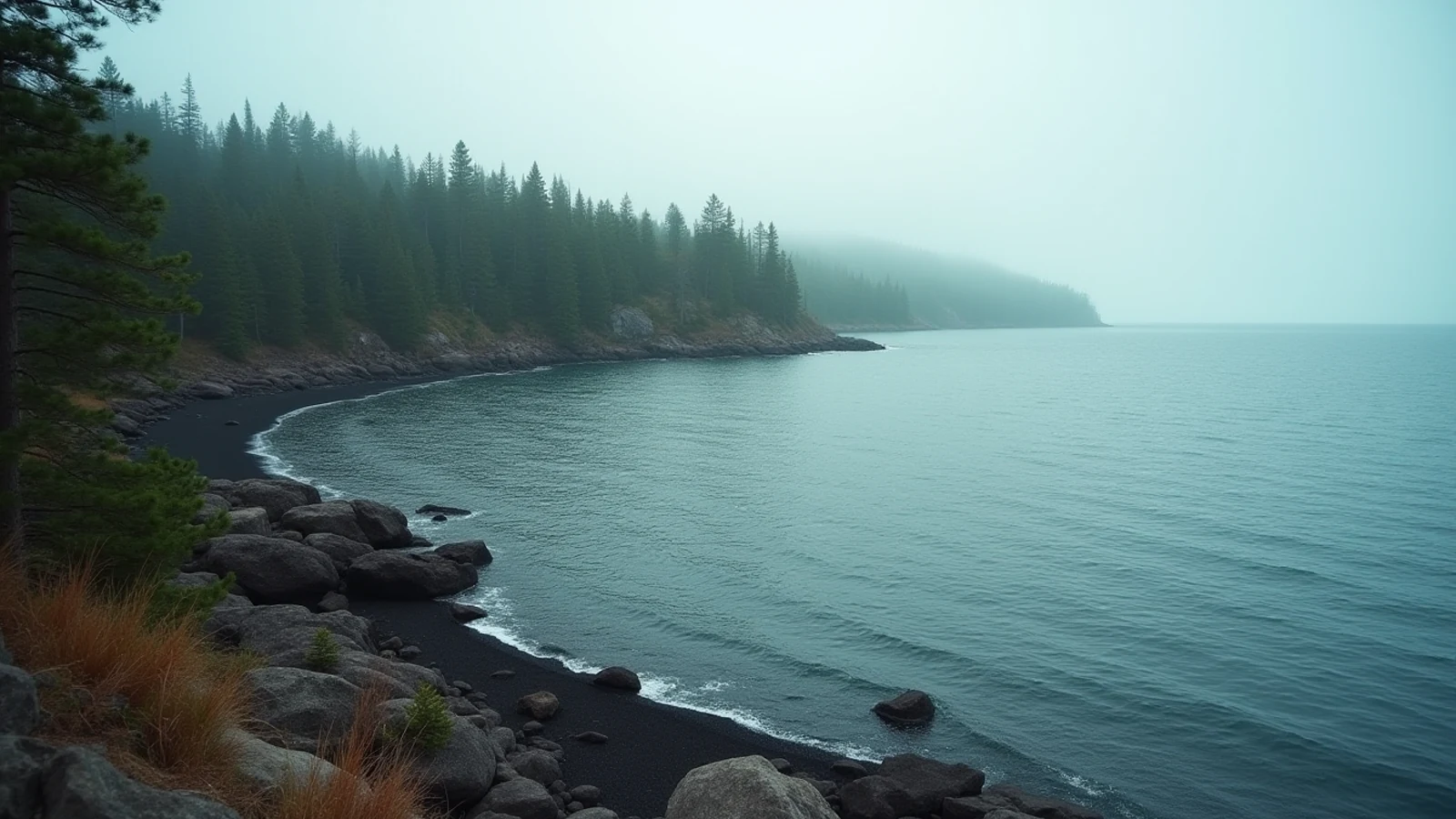
park · Lake Superior · est. 1937
Gooseberry Falls State Park
Five waterfalls on the Gooseberry River within a short walk of Highway 61, on Minnesota's North Shore of Lake Superior.
Gooseberry Falls is the most visited park on the North Shore and it earns it on convenience as much as on scenery. The falls are a few hundred yards from a large parking lot on Highway 61, the trail to the best of them is paved, and you can be looking at a 60-foot waterfall four minutes after you shut the car door.
That accessibility means it is busy. On a Saturday in July or during the first week of October it is very busy. It is still worth stopping.
The falls
The Gooseberry River drops off the Superior escarpment in a staircase. Five falls are named; three are the ones people see.
Upper Falls sits above the Highway 61 bridge, reached by a short walk from the visitor center.
Middle Falls is the headline: roughly 60 feet in two tiers, dropping into a basalt bowl. There is a viewing area from the trail and, in low summer water, exposed rock shelves people walk out onto below the drop.
Lower Falls is downstream, a wider and lower cascade with more places to sit on the rock.
Below the Lower Falls the river runs about a mile to Lake Superior and ends in a cobble beach at the river mouth. Fewer people walk that far and it is the quietest good thing in the park. The Gitchi Gummi Trail climbs the ridge above it for a view back across the lake.
The stonework
Everything built here in the 1930s was built by the Civilian Conservation Corps, and they worked in local gabbro. The Highway 61 bridge abutments, the retaining walls, the stairs, the picnic shelter — all of it is fitted stone, and it has held up for ninety years. The Castle in the Park picnic shelter is the showpiece. It is worth noticing that the infrastructure is part of what you came to look at.
When to go
Spring is peak flow. Snowmelt in May puts more water over the falls than any other time and the sound in the gorge is different.
Summer is low water and warm rock, which is when people wade the shelves and pools. The river drops enough by August that some years the falls thin out considerably.
Late September into early October is color, and it is the busiest fortnight of the year.
Winter freezes the falls into ice columns and the park grooms about 12 miles of cross-country ski trail. Ice climbers work the frozen faces under permit conditions.
Before you turn up
A Minnesota state park vehicle permit is required — daily or annual, purchasable at the visitor center. An annual permit is the right call if you are driving the North Shore.
The main lot fills on summer and fall weekends by mid-morning and there is no overflow on the highway.
The visitor center has restrooms, water, exhibits and a gift shop and keeps seasonal hours.
The rock beside the falls is wet basalt and it is genuinely slippery. People fall in every year. The pools below the drops are cold, deep, and moving — Superior-fed water in the 40s and 50s Fahrenheit. Above the falls the current is stronger than it looks flowing over smooth rock. Keep off the wet ledges and keep children off the shelf above any drop.
Fishing
The Gooseberry gets a spring steelhead run and holds brook trout above the falls; the falls themselves are a natural barrier to migration. The lake off the river mouth fishes for coho, lake trout and the occasional Kamloops rainbow.
Minnesota DNR runs specific North Shore stream regulations, distinct from the statewide rules, and they change annually. Check the current guide before you fish.
What you came for
- Upper, Middle and Lower falls are all within about half a mile of the visitor center on paved and stone-stepped trails.
- The Middle Falls drops roughly 60 feet in two tiers and is the one on every photograph of the park.
- The river runs out to a cobble beach where the Gooseberry meets Lake Superior — a mile or so downstream on the Gitchi Gummi Trail.
- Civilian Conservation Corps stonework from the 1930s runs through the whole park, including the Highway 61 bridge abutments.
- About 18 miles of hiking trail, groomed for cross-country skiing in winter, plus a Superior Hiking Trail connection.
Lights on this shore
- Split Rock Lighthouse6.4 mi
- Two Harbors Lighthouse13 mi · est. 1892
- Two Harbors Breakwater Light13 mi · est. 1897
Swimming here
This beach is on the state’s federal beach list, with the water-testing record and a link to today’s advisories:
- Gooseberry Falls State Park Beach0.6 mi · water sampled